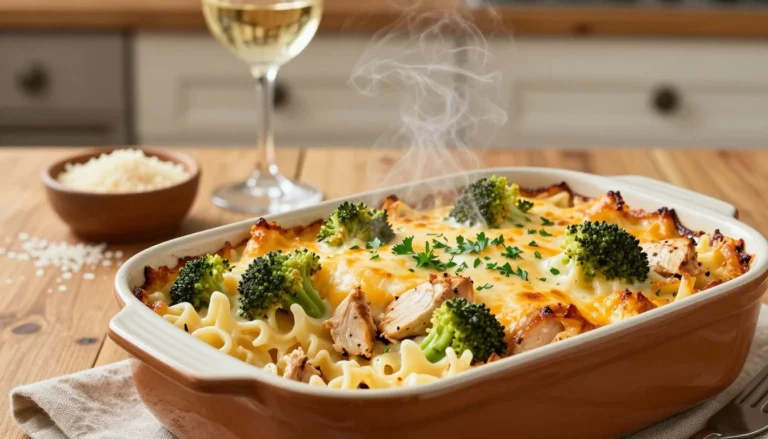
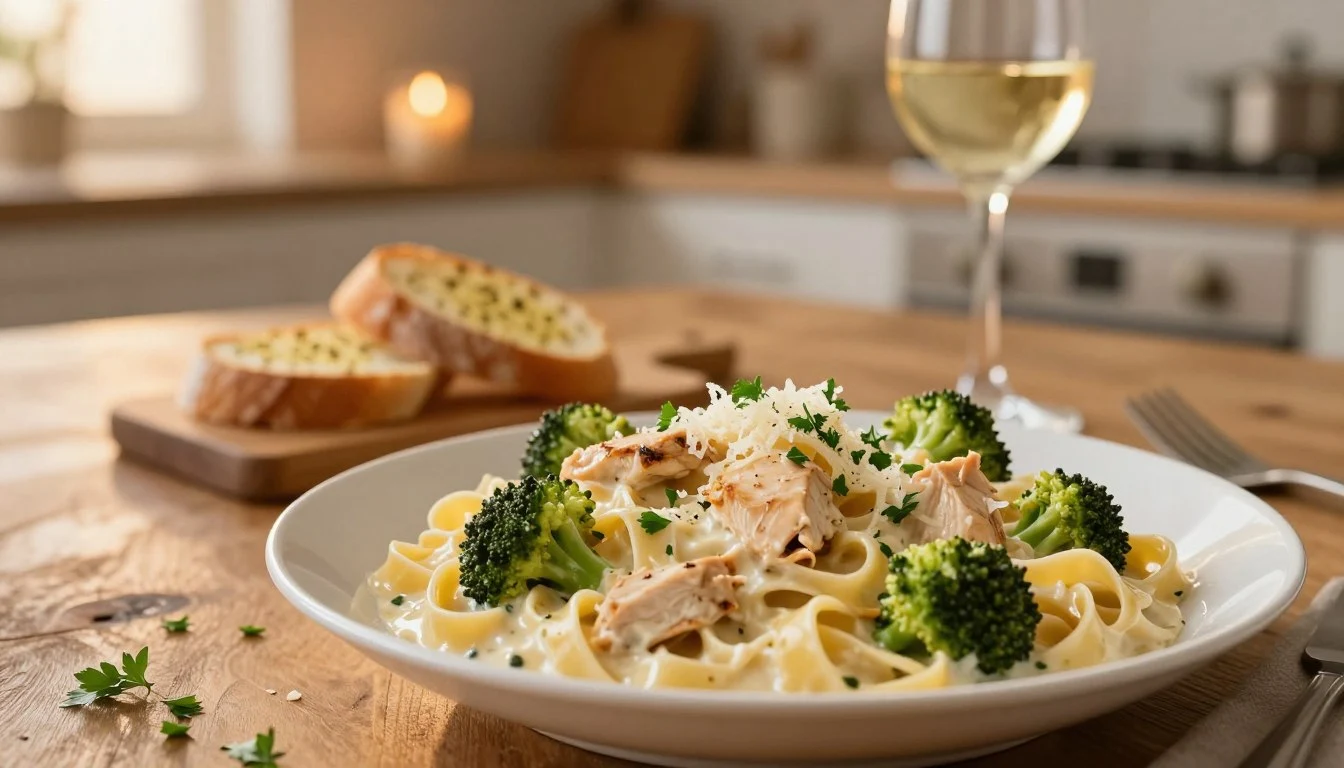
Chicken and Broccoli Alfredo Recipe: 5 Easy Expert Tips
This chicken and broccoli Alfredo recipe works best when each component is managed deliberately. The sauce should coat the pasta instead of collecting underneath it, the chicken should stay moist, and the broccoli should hold enough structure to contrast with the cream. Those results come from heat control, proper sequencing, and understanding how Parmesan reacts once it meets warm dairy.
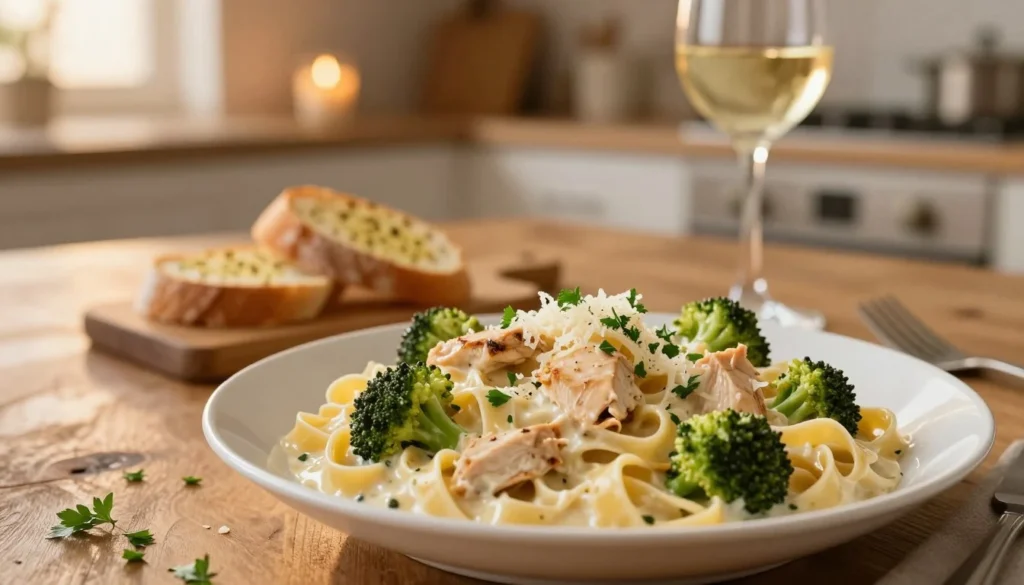
Alfredo sauce remains relevant because a short ingredient list can still deliver a complete pasta when the method is controlled. In this chicken and broccoli Alfredo recipe, the broccoli adds freshness and bite, while the chicken leaves browned fond in the skillet that strengthens the sauce without extra ingredients. That same skillet-first approach also improves our garlic butter chicken, where surface browning does much of the flavor work.
Key Takeaways
- Freshly grated Parmesan melts more evenly than pre-shredded cheese.
- Reserved pasta water helps the sauce cling instead of turning heavy.
- Chicken should reach 165°F for reliable doneness.
- Broccoli should stay bright and slightly firm for better contrast.
- Moderate heat matters more than adding extra cream or cheese.
Ingredients for Chicken and Broccoli Alfredo Recipe
Because the ingredient list is short, each choice has a visible effect on texture. Fettuccine is the standard shape because its broad surface gives the sauce more area to hold on to. Parmesan matters just as much: freshly grated cheese melts into the cream with less resistance, while pre-shredded cheese often contains anti-caking agents that make the sauce more likely to look dusty or feel slightly grainy.
For the Chicken and Broccoli
- Chicken contributes more than protein because proper browning creates fond that later dissolves into the sauce.
- Broccoli keeps the dish from becoming texturally flat by adding a cleaner, firmer bite between forkfuls.
- Uniform pieces cook more evenly, which prevents some pieces from drying while others finish late.
- An uncrowded pan encourages searing instead of steaming, and that surface color becomes part of the final flavor.
For the Alfredo Sauce
- Butter and heavy cream provide the fat structure that gives Alfredo its body.
- Garlic should soften gently until aromatic, because browned garlic can turn sharp and distract from the dairy.
- Parmesan thickens the sauce naturally when it is stirred into warm cream after the pan comes off heat.
- The finished sauce should look glossy and fluid enough to coat the pasta without pooling.
For the Pasta
- The pasta is part of the sauce system because the starch on its surface helps the sauce bind and stay cohesive when pasta water is added.

How to Make Chicken and Broccoli Alfredo Recipe
A dependable chicken and broccoli Alfredo recipe is mostly about timing. The pasta, chicken, broccoli, and sauce all reach their best point at different moments, so the job is to bring them together while the pan is still warm and the sauce is still loose enough to coat evenly. When the sequence is right, the sauce looks smoother and the final dish feels lighter despite the cream.
Step 1: Cook the Pasta
Pasta water is one of the most useful tools in this dish because it contains suspended starch that helps emulsify the sauce. That starch lets the cream and cheese spread more evenly over the noodles instead of sitting on the surface. Properly salted water also seasons the pasta itself, which keeps the final sauce from carrying the full burden of seasoning alone.
Step 2: Sear the Chicken
Chicken needs direct contact with the pan to brown efficiently. If the skillet is crowded, moisture collects and the pieces release liquid faster than it can evaporate, which means they steam instead of sear. Less browning also means less fond, and that reduces the savory depth the sauce can pick up later.
Step 3: Steam the Broccoli
Broccoli should finish bright green and tender enough to eat comfortably while still holding shape. Once it goes too far, it starts blending into the sauce and the dish loses one of its most useful points of contrast. The goal is not crunch, but firmness that keeps the vegetable distinct from the pasta and cream.
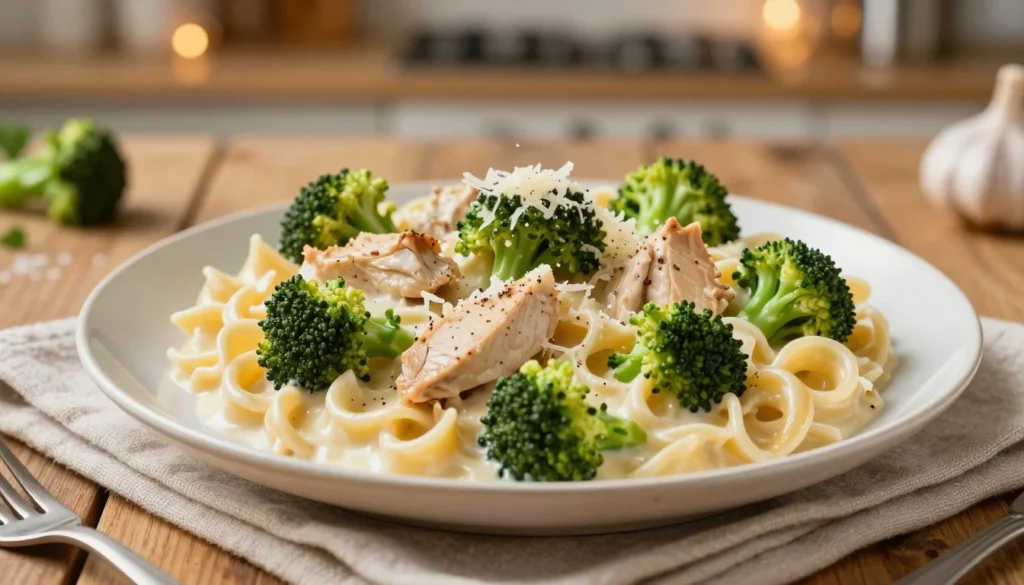
Step 4: Build the Alfredo Sauce
Heat management determines whether the sauce stays smooth. Garlic should soften in butter over moderate heat without browning, and the cream should reach only a gentle simmer. Once dairy boils aggressively, the emulsion becomes less stable and fat separation becomes more likely around the edges of the pan.
Parmesan is the most temperature-sensitive part of the process. Added to warm cream off heat, it melts gradually and thickens the sauce in a controlled way. Added over active heat, the proteins tighten too fast and the sauce can turn grainy. That one detail decides whether the texture feels silky or fragmented.
Step 5: Combine and Serve
Finishing the pasta in the skillet gives the noodles time to absorb some of the sauce instead of merely sitting under it. Add reserved pasta water in small amounts and toss between additions so the consistency changes gradually rather than all at once. For another cream-based pasta that relies on the same finishing method, see our marry me chicken pasta.
Technique Tips and Common Mistakes
The main failure point in a chicken and broccoli Alfredo recipe is sauce separation. That usually comes from boiling the cream too hard or adding Parmesan before the pan has cooled slightly. Another common mistake is skipping reserved pasta water, which removes the easiest way to adjust texture at the end. If the sauce starts looking oily or uneven, take the pan off heat and whisk in a small splash of cold cream or pasta water until it looks cohesive again.
Storage and Reheating
Cream sauces tighten in the refrigerator because the fat firms up as it cools. Reheat leftovers slowly so the sauce can relax without splitting. A small splash of milk or cream helps restore movement, but high heat usually pushes the fat to separate before the pasta warms through. That same low-and-slow reheating approach also helps with our creamy Tuscan chicken pasta. In any chicken and broccoli Alfredo recipe, gentle reheating is what keeps the sauce smooth instead of oily.
Conclusion
This chicken and broccoli Alfredo recipe succeeds because each step solves a specific technical problem. Salt the pasta water well, brown the chicken without crowding the pan, keep the broccoli firm-tender, and let the Parmesan melt only after the pan comes off heat. When those points are handled correctly, the sauce stays smooth, the texture stays balanced, and the pasta finishes with a cleaner, more controlled result.
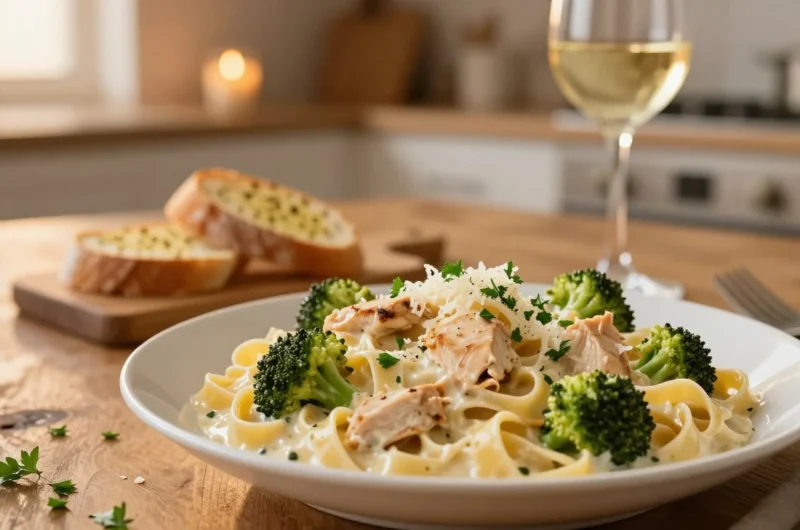
Chicken and Broccoli Alfredo Recipe
4
servings10
minutes20
minutes680
kcalIngredients
1 lb boneless, skinless chicken breast or chicken thighs, cut into bite-sized pieces
2 cups broccoli florets
2 tablespoons olive oil
1 teaspoon salt
½ teaspoon black pepper
½ cup unsalted butter
3 cloves garlic, minced
1 cup heavy cream
½ cup Parmesan cheese, freshly grated
½ teaspoon salt
¼ teaspoon black pepper
1 lb fettuccine pasta
Directions
- Bring a large pot of salted water to a boil. Cook the fettuccine for 8–10 minutes until al dente. Before draining, reserve about 1 cup of pasta water, then drain the pasta and set aside.
- Heat olive oil in a large skillet over medium-high heat. Season the chicken pieces with salt and black pepper, then cook them in a single layer for about 5–6 minutes per side until fully cooked and the internal temperature reaches 165°F. Remove from the pan and set aside.
- Steam the broccoli florets for about 3–4 minutes until tender but still bright green. Set aside.
- In the same skillet, melt the butter over medium heat. Add the minced garlic and cook for about 1 minute until fragrant. Pour in the heavy cream and let it simmer gently for about 2 minutes. Remove the pan from heat and stir in the grated Parmesan cheese until the sauce becomes smooth and creamy. Season with salt and black pepper.
- Add the cooked fettuccine to the sauce and toss to coat. If the sauce is too thick, add a few tablespoons of the reserved pasta water until the consistency becomes silky. Add the chicken and broccoli, gently toss everything together, and serve immediately.
Notes
- Chicken is safe to eat when it reaches an internal temperature of 165°F (74°C). Use a meat thermometer for the most reliable result.
- Remove the pan from heat before adding the Parmesan cheese to prevent the Alfredo sauce from becoming grainy or separating.
- Reserve some pasta cooking water before draining — the starch in the water helps loosen and emulsify the sauce if it becomes too thick.
- Do not overcook the broccoli; 3–4 minutes of steaming keeps it bright green and slightly crisp.
- Leftovers can be stored in an airtight container in the refrigerator for up to 3 days. Reheat gently with a splash of milk or a small piece of butter to restore the creamy texture.
- This dish does not freeze well because cream-based sauces tend to separate after thawing.
FAQ
What pasta works best in a chicken and broccoli Alfredo recipe?
Fettuccine is the standard choice because its broad, flat shape gives cream sauce more surface area to hold on to. Penne and rigatoni also work when you want shorter pasta that catches pieces of chicken and broccoli. Very thin noodles are less effective because the sauce slips off more easily.
Can I use pre-cooked chicken?
Yes. Rotisserie chicken is the easiest substitute, but it should be added near the end so it warms through without drying. The trade-off is flavor development: because the chicken was not browned in the skillet, the sauce will not get the same depth from fond.
How do I fix a broken Alfredo sauce?
Take the pan off heat immediately, then whisk in a small splash of cold cream or reserved pasta water. That can help reconnect the fat and cheese when the separation is still mild. Prevention is more reliable than repair, so the safest move is always to add Parmesan after the active heat is gone.
What do I do if the sauce is too thin or too thick?
If the sauce feels too thick, add pasta water a little at a time and toss between additions until it loosens. If it seems too thin, let it reduce briefly over low heat while stirring. Extra Parmesan can also thicken the sauce, but only after the temperature has dropped enough to avoid graininess.
Is this chicken and broccoli Alfredo recipe gluten-free?
It can be adapted with a sturdy gluten-free pasta. The sauce itself does not rely on flour, so the pasta is the main component that needs to change. For stricter needs, check the cheese label as well, since manufacturing practices can vary by brand. A chicken and broccoli Alfredo recipe stays easy to adapt here because the main adjustment is the pasta rather than the sauce.