Ground Beef Enchiladas: 5 Proven Tips for a Perfect Pan
Ground beef enchiladas are one of the most reliable baked dinners you can make at home—but the results vary dramatically based on a few key decisions. Get the filling consistency right, manage your sauce placement, and warm your tortillas before rolling, and you’ll pull a clean, cohesive pan out of the oven every time.
The difference between a pan that holds together and one that turns soggy comes down to a few controllable steps: brown the beef with real color, keep the filling thick before rolling, and apply the sauce in the right amounts. For background on the dish’s origins, enchiladas are a traditionally sauced and baked tortilla dish with deep roots in Mexican cuisine. On nights when you want something faster, our ground beef taco recipe is a strong alternative that skips the oven entirely.
Understanding what each step contributes matters more than following a sequence blindly. With ground beef enchiladas, the two biggest factors are texture and seasoning balance: you want a filling that’s savory and spoonable, and a sauce-to-cheese ratio that bakes up bubbly rather than wet.
Efficient assembly starts with a thick filling. When the beef mixture is tight before you roll, the tortillas hold their shape during baking—no splitting, no leaking, and no soggy bottoms. That one detail separates a pan you’ll repeat from one you’ll troubleshoot.
Key Takeaways
- Successful ground beef enchiladas start with beef browned to a deep color, not just cooked through to gray.
- Keep the filling thick and spoonable before rolling—wet filling causes soggy tortillas and leaking seams.
- Warm tortillas briefly until flexible; cold tortillas crack at the seam during rolling.
- Use sauce strategically: a thin base layer on the bottom, a generous even coat on top.
- Bake covered first for even heat and tender tortillas, then uncover to finish the cheese.
- Rest 5–10 minutes after baking so portions lift cleanly rather than falling apart on the spatula.
Ingredients for Your Ground Beef Enchiladas
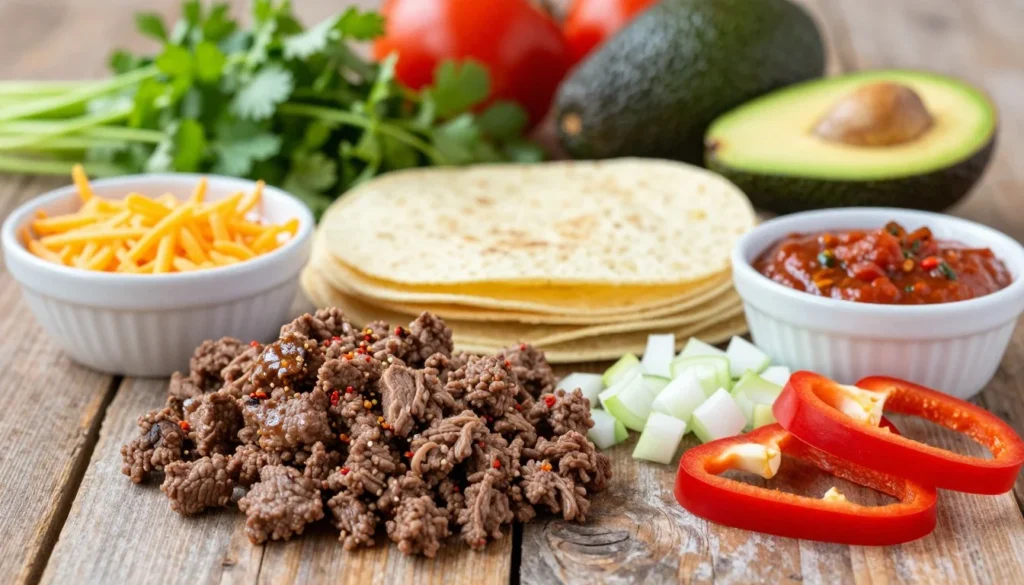
Building a firm, sliceable pan of ground beef enchiladas depends on ingredients that perform well in the oven, not just ones that taste good raw. You need a thick beef filling, tortillas that bend without cracking, a sauce you’d eat on its own, and cheese that melts into a smooth layer rather than turning oily. For another ground beef option with minimal prep, our ground beef and broccoli is a reliable skillet dinner worth having in rotation.
For the Beef Filling
A well-built filling tastes fully seasoned even after it’s wrapped in tortilla and covered in sauce. The fat content of your ground beef matters here: enough fat to brown properly and carry flavor, then drained so the pan doesn’t turn greasy. Toasting your spices in the pan for a full minute before adding any liquid deepens their flavor significantly.
- Ground beef: 80/20 browns best and holds seasoning well; leaner beef works but needs a little moisture added back carefully.
- Aromatics: onion adds sweetness and body to the filling; garlic adds sharp, savory depth quickly.
- Seasoning: a chili-cumin blend (or standard taco seasoning) builds the core “enchilada” flavor without extra steps.
- Liquid (minimal): just enough to bloom the spices, then simmered off completely so the mixture stays spoonable and tight.
For Assembly and Baking
Tortilla choice shapes the final texture of your ground beef enchiladas. Corn tortillas give a more traditional, slightly firm bite but crack when cold; flour tortillas roll easily and stay soft throughout baking. Either type needs a brief warm-up before rolling to prevent blowouts along the seam.
- Tortillas: warm just until flexible—steamy-wet tortillas can turn gummy during the bake.
- Enchilada sauce: if it’s very thick, thin it slightly so it spreads in an even coat; if it’s thin, use more on top and less inside the rolls.
- Cheese: Monterey Jack melts smoothly; cheddar adds sharper flavor; a blend gives the best combination of melt and taste.
- Fresh finish: cilantro is optional, but a small handful added after baking brightens the overall richness of the dish.
For Topping and Serving
The best toppings for ground beef enchiladas provide contrast: something cool, something crisp, and something acidic. Add everything after baking so toppings stay fresh rather than steaming into the dish. A squeeze of lime over the finished pan can lift a sauce that tastes slightly flat.
- Cool + creamy: sour cream or plain Greek yogurt.
- Crisp + fresh: shredded lettuce, cabbage slaw, or diced tomatoes.
- Bright + tangy: lime wedges, pickled onions, or salsa served at the table.
- Heat (optional): sliced jalapeños or hot sauce added right before serving.
Ingredient behavior matters as much as flavor. If your sauce is very thick, loosen it with a splash of water so it spreads in a thin, even coat—thick sauce clumps in heavy patches and can leave dry edges on the tortillas. If your sauce is thin, use less inside the rolls and concentrate most of it on top so the filling stays tight during baking.
For food safety, cook ground beef fully in the skillet before assembly—confirm it reaches 160°F / 71°C with an instant-read thermometer. The oven bake is for heating through and melting the cheese, not for finishing raw meat inside a rolled tortilla.
One practical rule that improves every pan: avoid overfilling. A modest, compact line of filling rolls tighter, seals better, and gives you cleaner servings. Any extra filling can be stirred into rice, spooned over chips, or used in a quick quesadilla later in the week.
How to Make Ground Beef Enchiladas Step-by-Step
Making ground beef enchiladas well comes down to three core skills: developing flavor in the beef, rolling without tearing, and controlling the bake so tortillas turn tender without becoming soft and mushy. Nail the filling consistency and sauce placement, and the rest follows naturally.
Step 1: Cook the Seasoned Ground Beef
Cook the beef over high enough heat to brown, not just steam gray. You’re looking for deep caramel-colored bits on the surface and visible fond on the skillet bottom—that’s where the savory flavor develops. After draining excess fat, simmer any added liquid completely off until the mixture looks thick, not glossy or wet. A loose filling is the most common cause of soggy ground beef enchiladas.
Step 2: Prepare Your Tortillas
Warm tortillas just until flexible and pliable. If they crack at the edges when you try to bend them, they need another few seconds of heat. If they turn steamy and limp, they can become gummy inside the bake. A brief cool-down of 30 seconds after warming makes them easier to handle and fill cleanly.
Step 3: Fill and Roll the Enchiladas
Spoon a thin, compact line of filling rather than a mound, then roll snugly so the seam sits on the bottom. If filling is spilling out during rolling, either the portion is too large or the mixture is still too loose—give it another minute on the heat to tighten. Keep the rolls pressed close together in the dish; the contact helps them hold shape and bake more evenly than rolls with gaps between them.
Step 4: Add Sauce and Cheese
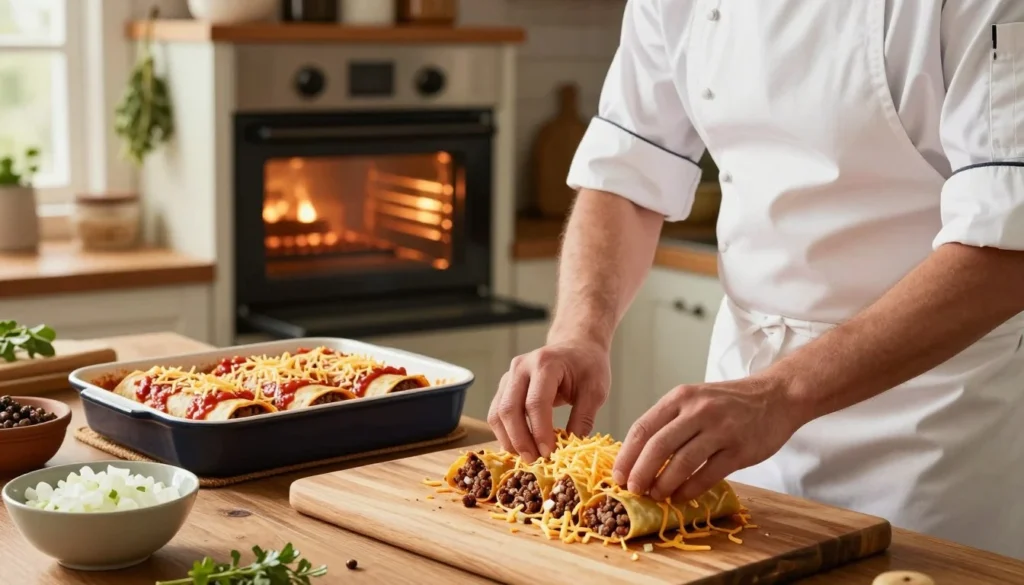
Start with a thin sauce layer on the dish bottom—this prevents the tortillas from sticking and keeps the edges from drying out. Pour the remaining sauce over the top in an even coat, paying attention to the center and edges of each roll, then apply the cheese. If you’re adding onions or jalapeños on top, keep them light so they don’t create a barrier that prevents the cheese from melting into a cohesive layer.
If you see liquid pooling in the bottom of the dish before the pan even goes in the oven, the filling was too wet or the sauce too thin. Correct it by blotting the excess with a paper towel and adding a little extra cheese on top to help absorb moisture during the bake.
Step 5: Bake Until Bubbly
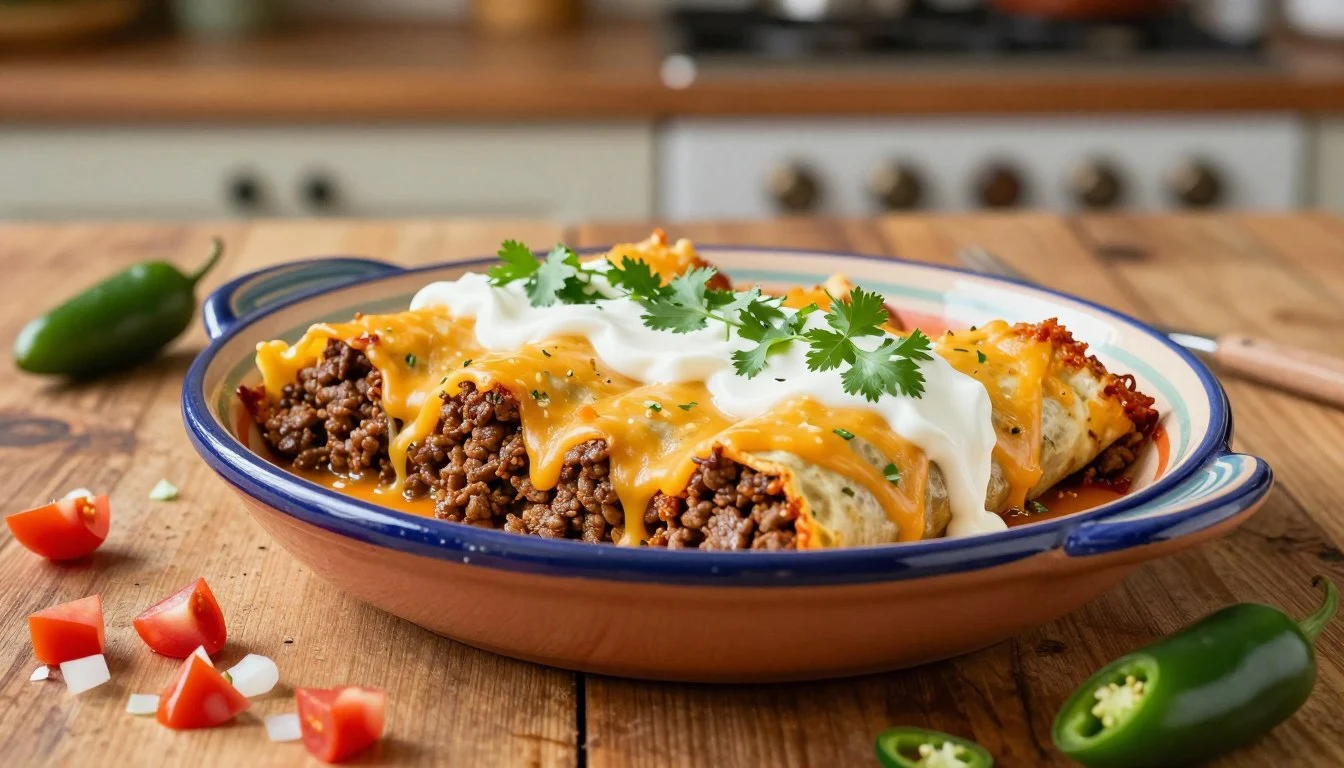
Bake covered first so the tortillas soften and the entire pan heats through evenly, then remove the foil to finish. You want sauce bubbling steadily around all the edges—not just one hot spot—and cheese that’s fully melted with a few light golden patches. Darker browning on cheese can turn bitter, so watch the final uncovered minutes closely. Resting 5–10 minutes after the oven lets the sauce thicken slightly so portions lift cleanly.
- Heated-through cue: steady bubbling around all edges of the pan, not just one spot.
- Cheese cue: fully melted with a few golden freckles; avoid heavy browning, which can taste bitter.
- Resting cue: sauce tightens as it sits, which holds the rolls together when you lift them.
Serving Tips and Storage Instructions
Serve while the cheese is still stretchy and the sauce is glossy. A crisp side—salad, cabbage slaw, or chips—balances the richness of the pan, and a cool topping keeps individual portions from feeling too heavy. For the cleanest servings, use a wide spatula and lift from the short end of each roll rather than the middle.
Best Ways to Serve Your Enchiladas
Layer toppings deliberately: sour cream first, then tomatoes or salsa, then cilantro. Avocado and lime work especially well when the enchilada sauce is bold and rich. For brighter contrast against the savory bake, pickled onions or a quick cabbage slaw sharpen the overall flavor and cut through the cheese.
How to Store Leftovers
Let the pan cool until it stops steaming, then cover tightly and refrigerate. For reheating, the oven is the most consistent method: cover with foil until hot through, then uncover briefly to refresh the cheese. If the portion looks dry going in, add a small spoonful of sauce or a splash of water around the edges before covering. If you enjoy bold, quick ground beef dinners, this Mongolian ground beef is another strong option worth trying.
Make-Ahead and Freezing Options
Make-ahead success depends on moisture control. Assemble with only a thin sauce layer underneath, then hold back a small amount of sauce to pour over right before baking—this helps keep the tortillas structured during an overnight refrigerator rest. For freezing, wrap the assembled pan tightly in two layers before storing.
When reheating a frozen pan, add a spoonful or two of sauce around the edges before covering with foil. If the dish looks watery after reheating, remove the foil and let steam cook off for a few minutes—the sauce tightens as it cools slightly.
For larger batches, portion into smaller pans before freezing. Smaller portions thaw faster, reheat more evenly, and produce tortillas that stay tender throughout rather than rubbery at the edges and cold in the center.
Conclusion
Ground beef enchiladas reward attention to a few technical details: proper browning, a tight filling, and controlled sauce application. Get those right and the pan bakes up cohesive, sliceable, and consistently satisfying—not soggy or falling apart at the seam.
Once you’ve worked through the technique once, adjusting is straightforward. Swap red sauce for green, add black beans or corn to the filling, or change the cheese without touching the method. The structure holds regardless of the variation you choose.
If you want a baked dinner that holds up well through reheating and freezing without losing quality, ground beef enchiladas are a dependable choice. The leftovers reheat cleanly, the method is easy to repeat, and small tweaks let you adapt the recipe to whatever you have on hand.
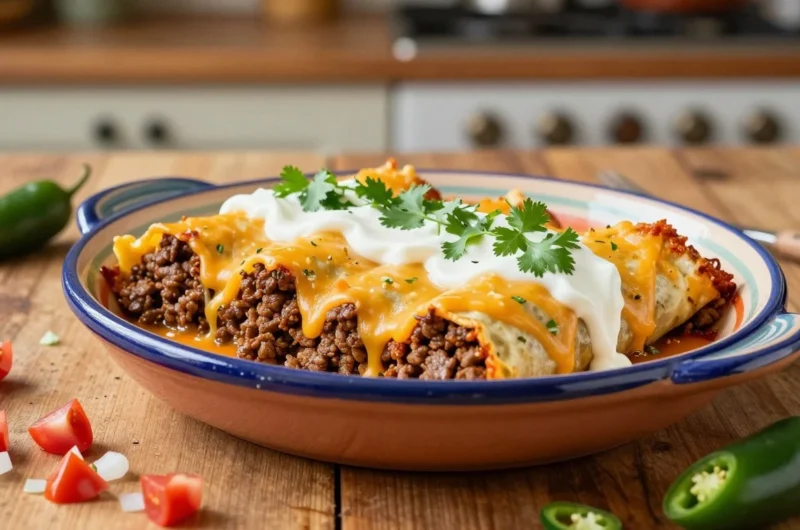
Ground Beef Enchiladas (Cheesy, Easy Weeknight Pan)
4
servings20
minutes25
minutes450
kcalIngredients
1 lb (450 g) ground beef (80/20 preferred)
1 small onion, finely diced
2 cloves garlic, minced
2–3 tbsp taco seasoning (or chili powder + cumin + paprika)
1/3 cup water or low-sodium broth (as needed)
8–10 tortillas (corn or flour)
2 cups enchilada sauce (red or green)
2 cups shredded Monterey Jack, cheddar, or a blend
1/4 cup chopped fresh cilantro (optional)
Sour cream (for serving, optional)
Diced tomatoes (optional)
Shredded lettuce (optional)
Avocado slices or lime wedges (optional)
Directions
- Preheat your oven to 375°F (190°C) and lightly spread a thin layer of enchilada sauce in the bottom of a baking dish.
- In a large skillet over medium-high heat, cook the ground beef until fully browned and no longer pink. Break it into small crumbles as it cooks. Drain excess fat.
- Add the diced onion and cook until softened, about 3–4 minutes. Stir in the garlic and seasoning, then add a small splash of water or broth. Simmer until the mixture thickens and is spoonable, not watery.
- Warm the tortillas briefly in the microwave or on a dry skillet until soft and flexible. This prevents cracking when rolling.
- Spoon a modest line of beef filling onto each tortilla, roll tightly, and place seam-side down in the prepared baking dish.
- Pour enchilada sauce evenly over the rolled tortillas, making sure the edges are lightly coated. Sprinkle shredded cheese evenly on top.
- Cover with foil and bake for 15–20 minutes, until heated through and bubbling at the edges. Remove foil and bake an additional 5 minutes to lightly brown the cheese.
- Let rest for 5–10 minutes before serving. Add optional toppings and serve warm.
Notes
- Visual doneness: The filling should look thick and cohesive, not watery. After baking, the sauce should bubble at the edges and the cheese should be fully melted with light golden spots.
- Prevent soggy tortillas: Avoid overfilling and don’t oversoak with sauce. A thin layer on the bottom and an even coating on top is enough.
- Food safety: Always cook ground beef to an internal temperature of 160°F (71°C) before assembling the enchiladas.
- Make-ahead tip: Assemble up to 24 hours in advance, cover tightly, and refrigerate. Add a splash of extra sauce before baking if needed.
- Freezing: Wrap tightly and freeze up to 3 months. Thaw overnight in the refrigerator for best texture.
- Reheating: Cover with foil and warm in a 350°F (175°C) oven until hot. Uncover briefly at the end to refresh the cheese.
FAQ
Can you use flour tortillas instead of corn for this recipe?
Yes. Flour tortillas roll easily, stay soft through the bake, and hold the filling without cracking. Corn tortillas give a more traditional texture but require warming first—cold corn tortillas split along the seam when rolled and can leave gaps in the pan that affect how evenly the ground beef enchiladas bake.
How do you prevent your enchiladas from becoming soggy?
The most effective fix is a thick filling: simmer off any excess liquid until the beef mixture is spoonable and tight, not wet. Apply a thin sauce layer on the bottom of the dish and an even coat on top—don’t flood the pan. Baking covered first traps steam that softens the tortillas gently rather than making them dissolve.
What type of ground beef provides the best flavor for the filling?
An 80/20 lean-to-fat ratio browns most effectively and carries seasoning well. The important step is draining the excess fat after browning so the filling is rich but not greasy. If you use leaner beef, stir in a spoonful of sauce or broth while simmering to prevent the mixture from turning dry and crumbly inside the tortilla.
Can you prepare this meal ahead of time and freeze it?
Yes. Assemble the ground beef enchiladas, wrap tightly, and freeze for up to 3 months. For best results, thaw overnight in the refrigerator before baking. If going straight from frozen, extend the covered bake time so the center heats through fully before uncovering to finish the cheese.
What are the best toppings to add after baking?
Cool, crisp toppings contrast well against the warm, rich pan: sour cream, diced tomatoes, shredded lettuce, avocado slices, and lime. If you want heat, add sliced jalapeños or a spoon of salsa right before serving—adding them before baking softens them too much and blunts the brightness.
How should you reheat your leftovers for the best results?
The oven is the most reliable method for keeping tortillas tender: cover with foil and warm at 350°F / 175°C until heated through, then uncover briefly to freshen the cheese. For microwave reheating, cover the portion with a damp paper towel and heat in short bursts so the center warms without toughening the edges of the tortilla.