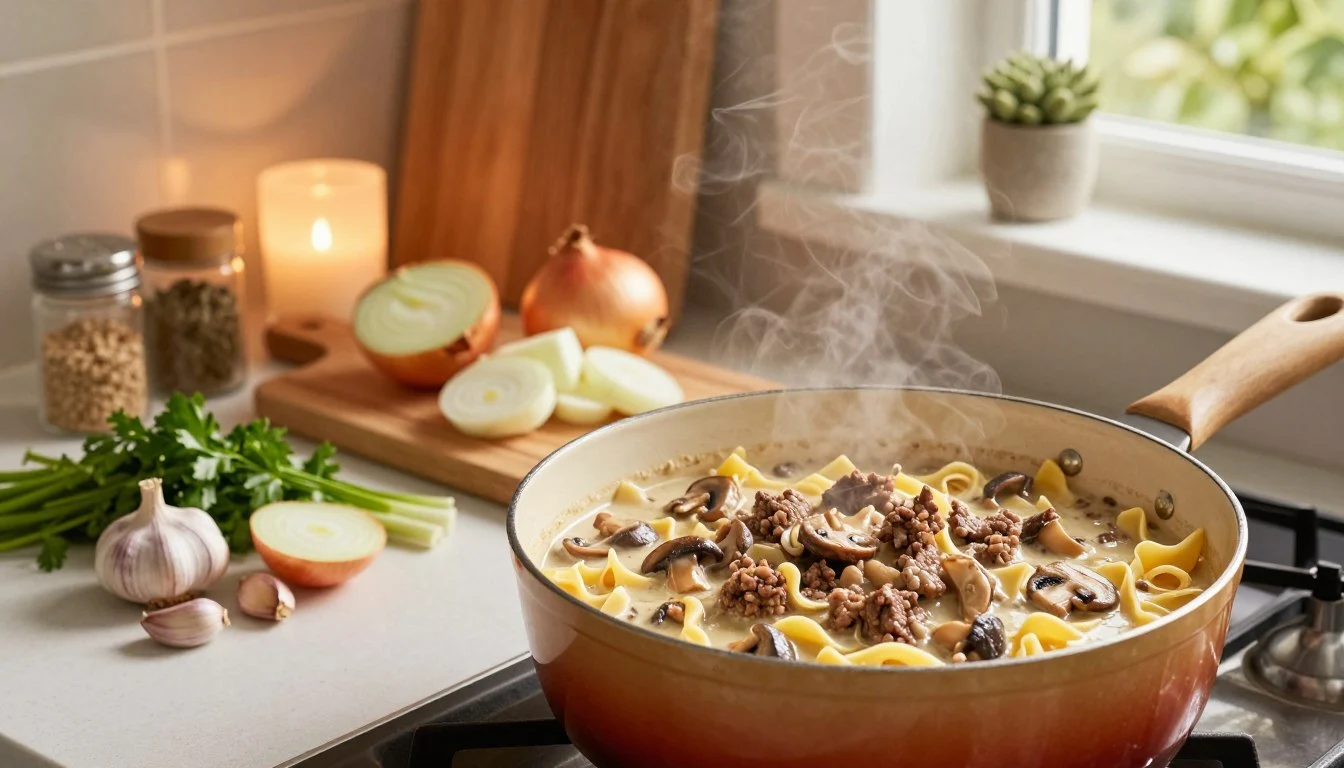
Ground Beef Stroganoff: 5 Tips for a Perfectly Creamy Sauce
Ground Beef Stroganoff is a one-skillet dinner built on technique, not time. You get a rich mushroom sauce, tender egg noodles, and that classic creamy tang—all without a long ingredient list or complicated steps. Once you understand why each step matters, you can produce consistent, reliable results every time you make this ground beef stroganoff.
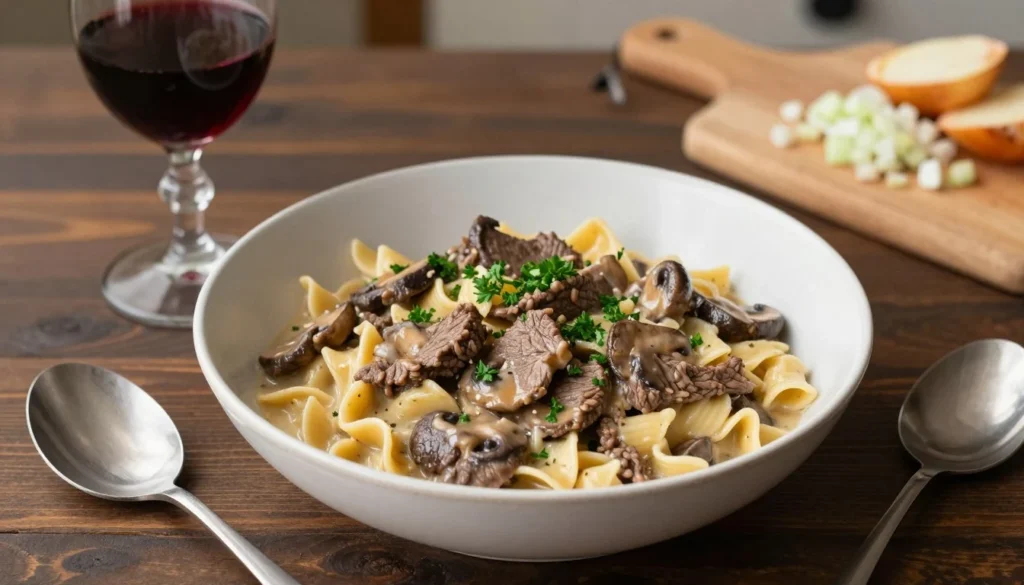
The flavor depends on a few small moves that matter: let the beef actually brown before stirring, then deglaze with broth to lift every caramelized bit from the pan—that’s concentrated, free flavor you don’t want to leave behind. If you enjoy quick skillet dinners, this ground beef and broccoli is another reliable weeknight option worth bookmarking.
Stroganoff is defined by its creamy, tangy, deeply savory sauce. This version keeps that character intact while staying realistic for a normal evening. Curious about the dish’s origins? The history of Beef Stroganoff traces a fascinating journey from Russian nobility to global home kitchens.
Key Takeaways
- This Ground Beef Stroganoff comes together in about 30 minutes, with most of that being hands-off simmer time.
- Brown the beef until you see deep color and browned bits on the pan bottom—this fond forms the foundation of the sauce’s flavor.
- Keep the sauce smooth by stirring in sour cream off the heat or over the lowest possible setting.
- Dijon mustard and Worcestershire add savory depth without making the sauce taste sharp or heavy.
- Easy to adapt: skip mushrooms, use Greek yogurt instead of sour cream, or swap noodle shapes without disrupting the technique.
- Leftovers reheat best over low heat with a splash of broth to restore the sauce’s creamy consistency.
What You’ll Need for Ground Beef Stroganoff
Prep your aromatics before the pan heats up—once things are moving, the process is fast. Having everything measured and chopped in advance is what keeps this ground beef stroganoff from feeling rushed. If you’re building a rotation of quick ground beef dinners, Mongolian ground beef offers a sharp contrast in flavor profile while using a similar approach and timing.
Main Ingredients
The recipe works in layers rather than a long checklist. Ground beef and aromatics form the savory base. Mushrooms add umami and body—cremini have a deeper, earthier flavor than white button mushrooms and hold up better during browning. Beef broth provides the sauce’s structure, while Dijon mustard contributes gentle heat and acts as a mild emulsifier to help the sauce stay cohesive. Worcestershire adds a fermented depth that’s difficult to replicate with substitutions.
Sour cream finishes it with the tang and silky texture that define a proper stroganoff. Its fat content is what creates that glossy, velvety result—low-fat versions tend to produce a thinner, less stable sauce. If your ground beef stroganoff sauce has ever turned grainy or broken, it’s almost always a heat problem: dairy added too fast over too-high heat. Keep the simmer gentle once broth is in, and always drop to the lowest setting before the sour cream goes in.
Kitchen Tools
Use a wide, deep skillet or sauté pan—extra surface area helps the beef brown rather than steam, and the depth gives sauce and noodles room to simmer without spilling. A wooden spoon is ideal for scraping up browned bits without scratching the pan surface, and a lid speeds up noodle cooking if you’re doing this one-pot.
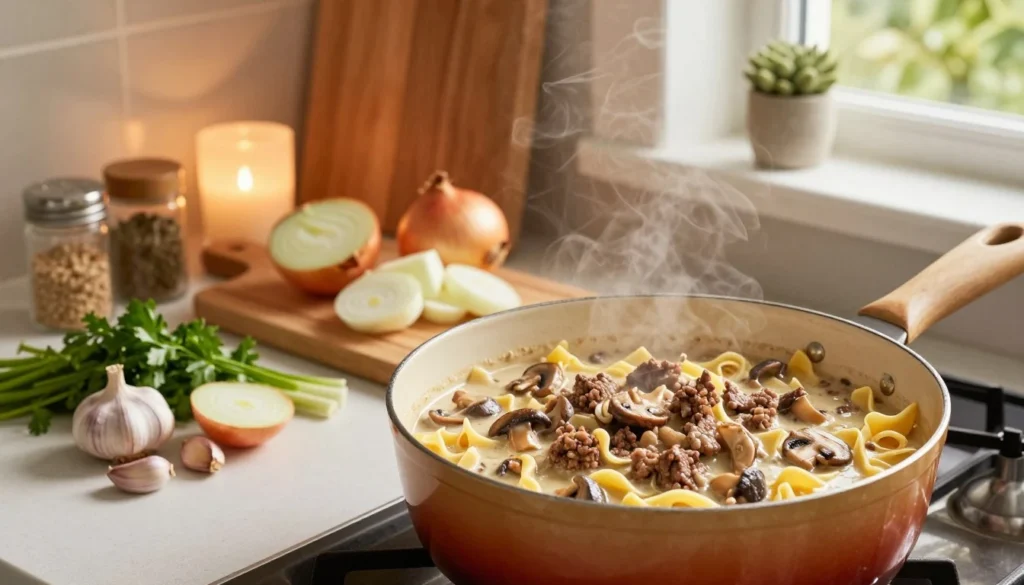
One practical tip: keep a small measuring cup of warm broth near the stove. Different noodle brands absorb liquid at different rates, and having extra broth ready prevents the pan from drying out before the pasta finishes cooking.
How to Make Ground Beef Stroganoff
Making Ground Beef Stroganoff well comes down to three non-negotiables: real browning on the beef, a controlled simmer, and sour cream added at the very end. Get those right and the sauce stays glossy and creamy—not greasy, not broken.
Cook the Ground Beef and Vegetables
Start with a properly hot pan. Spread the beef out and resist the urge to stir—let it sit undisturbed for about a minute so it develops real browning rather than steaming gray. You want deep brown edges and visible fond on the skillet bottom. This caramelization is the Maillard reaction at work: surface proteins transform into hundreds of new flavor compounds that simply don’t exist in gray, undercooked beef.
Once the beef is mostly cooked through, add onion and mushrooms. Cook until the mushroom liquid evaporates completely and the edges begin to turn golden. Rushing this stage produces a watery sauce; patience here pays off in the final texture.
Build the Creamy Sauce
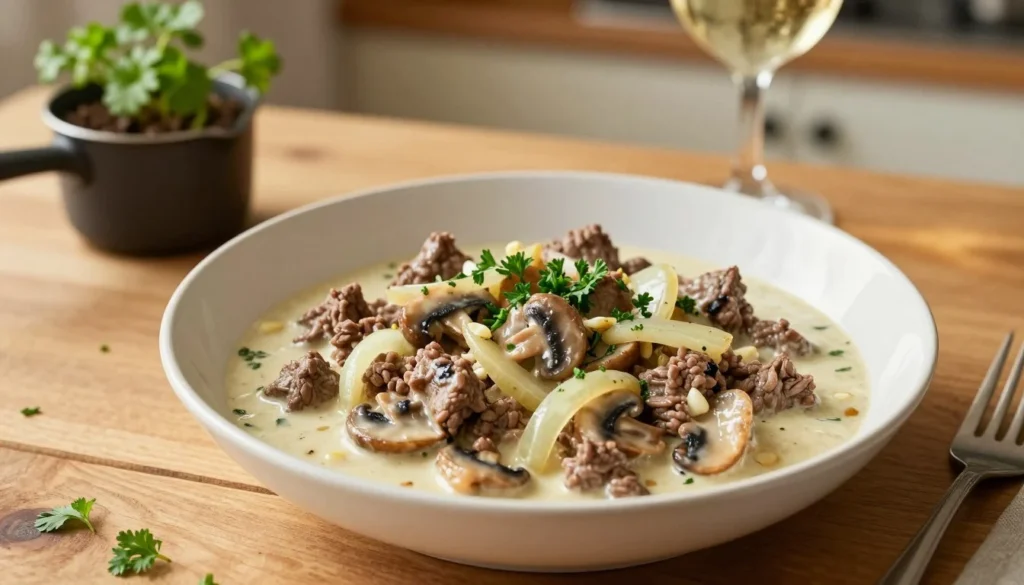
Add the broth and immediately scrape up all the fond from the bottom—that’s where concentrated flavor is stored. Hold the heat at a gentle simmer, not a rolling boil, so the sauce emulsifies properly rather than reducing unevenly. If you want a thicker result, let it reduce for a few minutes before adding dairy, or use a small slurry of flour or cornstarch mixed with cold water.
Critical step: sour cream goes in last, off the heat or on the lowest setting, so it incorporates smoothly without curdling. That single move is what keeps the sauce in this Ground Beef Stroganoff stable and velvety rather than broken and greasy.
Finish with Noodles
Cook noodles just to al dente—they’ll continue absorbing liquid even off the heat, and fully cooked noodles added to the skillet will turn soft in leftovers. If you simmer them directly in the pan, stir a couple of times to prevent sticking and add a splash of broth if the liquid level drops before the pasta is tender. The target texture is noodles that are coated and clingy, not swimming in loose sauce.
Expert Tips and Variations
These adjustments keep the technique intact while working with what you have. For a lighter sauce, swap sour cream for plain Greek yogurt—add it off the heat and stir gently. If mushrooms aren’t an option, skip them and add an extra pinch of paprika and more onion; the sauce will remain savory and balanced. For another quick skillet meal with a completely different flavor direction, ground beef tacos pair well in a weekly rotation.
- Best browning: Give the beef full contact with the pan. Don’t stir constantly, and brown in batches if the skillet is crowded—crowding causes steaming rather than browning.
- Prevent a broken sauce: Sour cream goes in off the heat or on the lowest setting. Never boil the sauce after dairy is added.
- Too salty? Add a splash of broth and a spoonful of sour cream or yogurt to dilute and soften the salt.
- Too thin? Reduce uncovered for a few minutes before adding dairy, or use a quick slurry of flour or cornstarch mixed with cold water.
Conclusion
Ground Beef Stroganoff is a high-payoff dinner when you understand the mechanics behind it. Brown the beef properly for Maillard flavor development, keep the simmer controlled so the sauce emulsifies cleanly, and add sour cream at the very end—those three steps separate a glossy, creamy result from a greasy or broken one.
Once you’ve made it as written, adjust it to fit your preferences: more mushrooms, no mushrooms, a lighter dairy swap, or a different pasta shape. The technique holds regardless of the variation. Ground Beef Stroganoff rewards attention to the small details, and once those details become habit, you can produce it consistently without thinking twice.
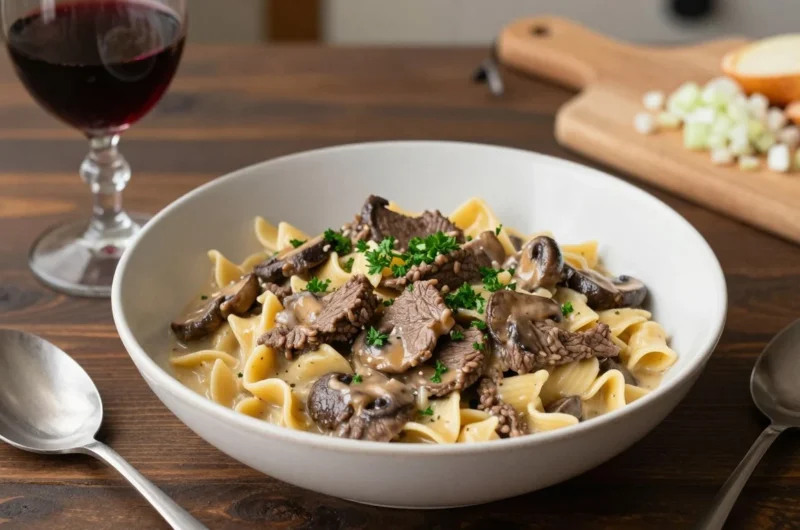
Ground Beef Stroganoff – Easy One-Pot Creamy Dinner in 30 Minutes
Course: Dinners4
servings10
minutes20
minutes520
kcalIngredients
1 lb ground beef (80–90% lean)
1 tablespoon olive oil or butter (only if needed)
1 medium onion, finely chopped
2–3 garlic cloves, minced
8 oz mushrooms, sliced (cremini or white)
2 tablespoons tomato paste (optional, for depth)
1 tablespoon Dijon mustard
1 tablespoon Worcestershire sauce
2 cups beef broth (plus extra if needed)
1 teaspoon paprika (optional)
Salt and black pepper, to taste
8 oz wide egg noodles
¾ cup sour cream
Fresh parsley, chopped (optional, for garnish)
Directions
- Heat a large deep skillet over medium-high heat. Add the ground beef and cook, breaking it apart, until well browned. Drain excess fat if needed.
- Add chopped onion and sliced mushrooms. Cook 5–7 minutes until softened and lightly browned. Stir in minced garlic and cook 30 seconds.
- Stir in tomato paste (if using), Dijon mustard, Worcestershire sauce, and paprika. Cook for 1 minute to develop flavor.
- Pour in beef broth and scrape up any browned bits from the pan. Bring to a gentle simmer. Add egg noodles, stir, cover, and cook 7–10 minutes until noodles are tender, stirring occasionally.
- Reduce heat to low. Stir in sour cream until fully combined and creamy. Do not boil after adding sour cream.
- Taste and adjust salt and pepper. Garnish with chopped parsley if desired and serve immediately.
Notes
- Visual doneness: The beef should be deeply browned in spots (not gray), and mushrooms should look reduced and lightly golden, not watery. The sauce should coat the back of a spoon without being runny.
- Food safety: Ground beef should reach 160°F (71°C).
- Prevent a broken sauce: Always lower the heat before adding sour cream. Do not boil after dairy is added.
- If the sauce is too thin: Let it simmer uncovered for a few extra minutes before adding dairy, or stir in a quick slurry (1 teaspoon flour or cornstarch mixed with cold water).
- If the sauce is too thick: Add a splash of warm beef broth or hot water and stir gently.
- Storage: Refrigerate in an airtight container for up to 3 days.
- Reheating: Reheat gently over low heat (or in short microwave bursts) with a splash of broth to keep the sauce smooth.
- Substitution: Swap sour cream for plain Greek yogurt, stirring it in off heat.
- One-pot tip: Noodles continue absorbing liquid as they sit. If leftovers seem tight the next day, loosen with a splash of broth before reheating.
FAQ
Can you use a different type of meat in ground beef stroganoff?
Yes. Ground turkey or chicken both work for a lighter version of Ground Beef Stroganoff—just increase the seasoning since both are milder than beef. Thinly sliced beef is also an option; keep the simmer gentle to avoid toughening the meat, and still add sour cream at the end to protect the sauce.
What are the best types of noodles to use?
Wide egg noodles are the traditional choice for ground beef stroganoff—they cook quickly and hold sauce well due to their porous, ridged surface. Short pasta shapes like rotini are a solid substitute, and gluten-free noodles work fine, though some brands absorb liquid faster and can become overdone before you realize it. Keep a closer eye on timing when using alternatives.
How can you make the sauce thicker if it appears too thin?
Simmer uncovered for a few minutes first—reduction thickens the sauce without altering flavor. If you need faster results, stir in a small slurry of flour or cornstarch mixed with cold water and simmer briefly. Avoid high heat after sour cream has been added; it will break the sauce rather than thicken it.
Can you substitute sour cream with a lighter option?
Plain Greek yogurt is the most effective swap—it has a similar tang and protein structure that behaves comparably under low heat. Add it off the heat and stir gently to keep it smooth. The flavor will be slightly brighter than sour cream, which many people find they actually prefer once they try it.
What is the key to getting the best flavor out of mushrooms?
Patience. Mushrooms need enough time in the pan for their moisture to fully evaporate before they can brown and develop deep savory flavor. If the pan is crowded, they’ll steam instead of sear—use a wider pan or cook them in two batches. The difference between steamed mushrooms and properly browned ones is significant in the final sauce.
How should you store and reheat leftovers for the best results?
Store cooled leftovers in an airtight container in the refrigerator. Reheat over low heat or in short microwave bursts, adding a small splash of broth or water to loosen the sauce. Avoid high heat—it will cause the dairy to separate and the noodles to overcook.
Do you need to cook the noodles separately before adding them?
No—simmering noodles directly in the skillet keeps this truly one-pot and lets them absorb the sauce’s flavor as they cook. Stir once or twice to prevent sticking and add broth if the liquid level drops before the pasta is done. If you want firmer noodles in leftovers, cook them separately and combine just before serving.