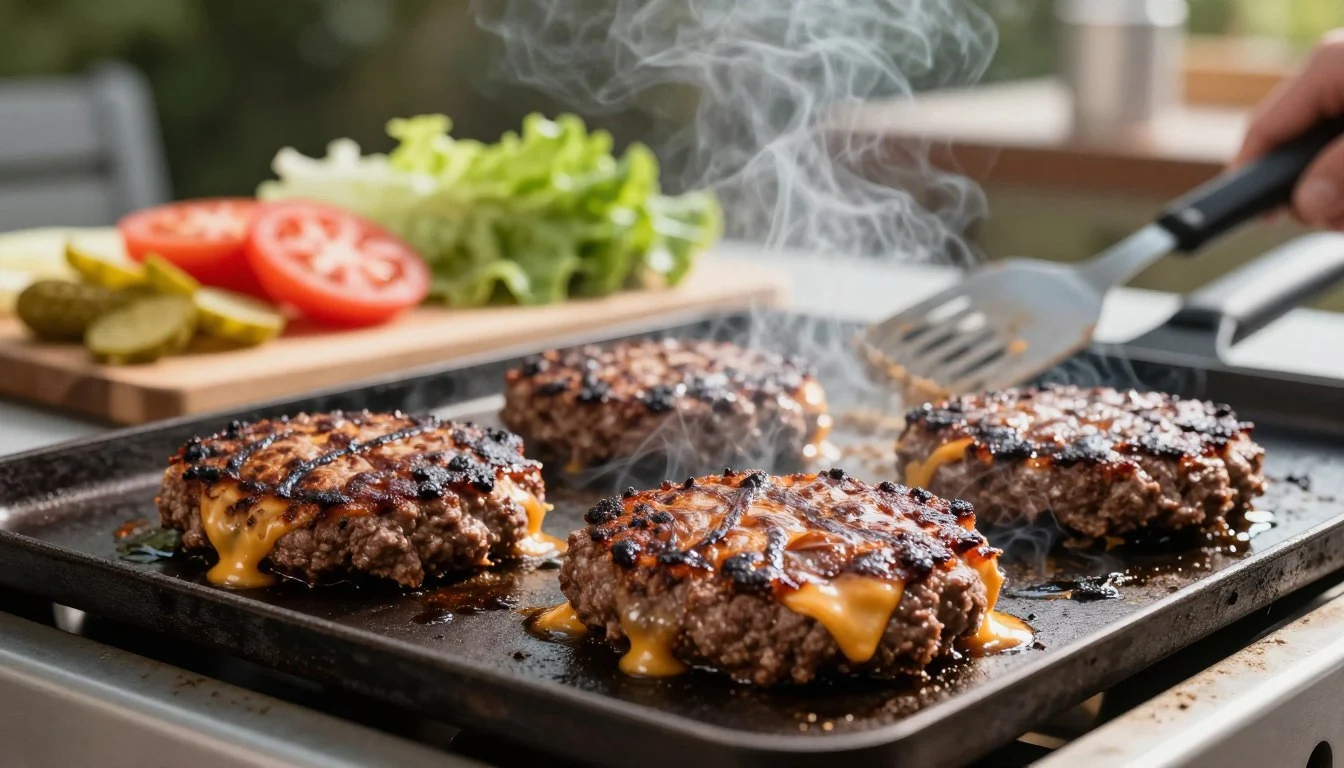
Smash Burger Recipe Blackstone – 7 Secrets to Perfect Crispy Edges
Few cooking experiences match the satisfaction of pressing fresh ground beef onto a blazing-hot griddle and hearing that instant sizzle. That sound means one thing: crust is forming. If you want crispy, lacy edges and a juicy center every time, this Smash Burger Recipe Blackstone guide will show you exactly how to master the technique with confidence and consistency.
What Makes a Smash Burger Special?
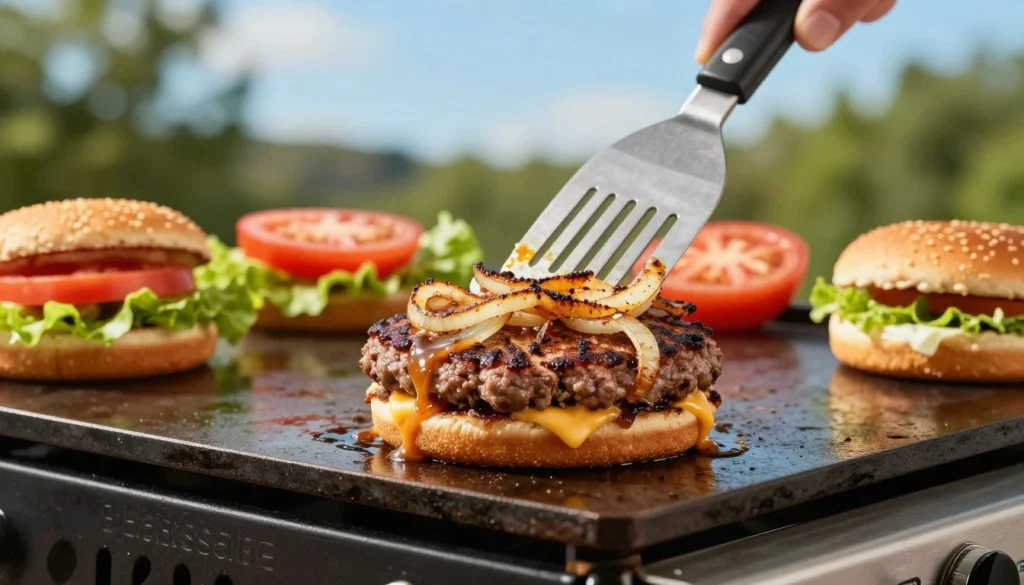
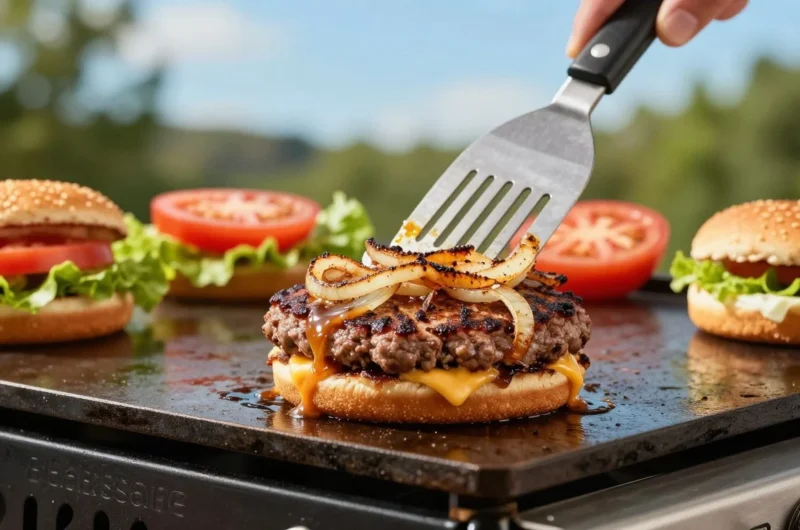
The defining feature of a smash burger is aggressive surface contact. When loosely packed ground beef is pressed firmly onto hot steel, moisture evaporates quickly and proteins brown through the Maillard reaction. This chemical reaction creates hundreds of new flavor compounds responsible for that deep, savory crust.
Unlike thick grilled burgers that rely on internal juiciness alone, smash burgers maximize browning. More browning means more flavor intensity. The thin, crispy edges provide texture contrast against the tender center, making each bite balanced and satisfying.
This is why mastering a Smash Burger Recipe Blackstone is more about technique and heat management than complicated ingredients.
Why the Blackstone Griddle Works Best
A flat-top griddle offers full metal contact and even heat distribution across the surface. Unlike open flame grills, which can create flare-ups and uneven browning, the Blackstone allows complete control over temperature and cooking zones.
- Consistent edge-to-edge heat
- No flare-ups from dripping fat
- Large cooking surface for batch cooking
- Ability to create multi-zone temperature control
Because smash burgers cook quickly, consistency is critical. The Blackstone griddle provides the stable environment needed to repeat perfect results every time.
Choosing the Right Beef
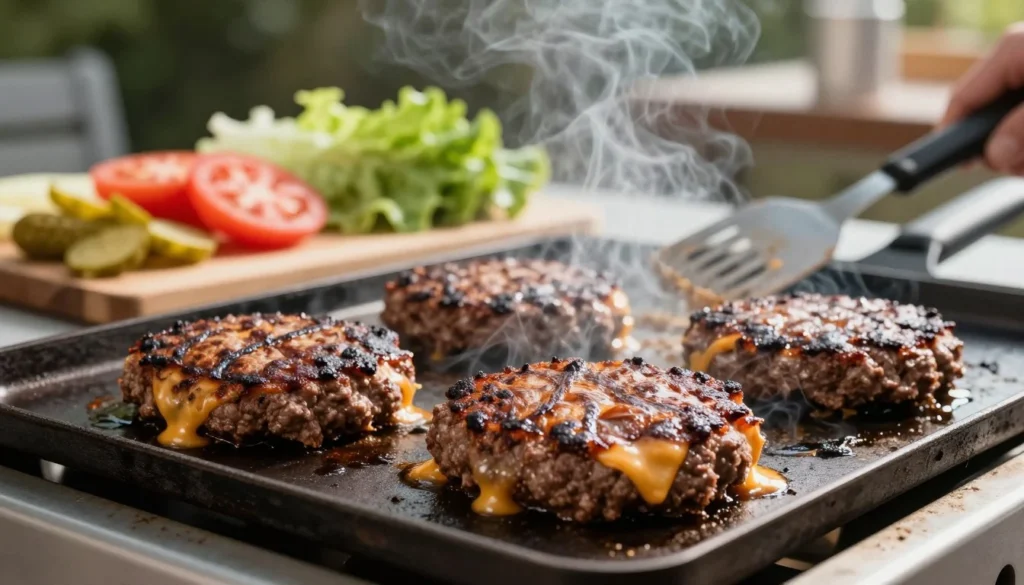
The foundation of any successful Smash Burger Recipe Blackstone is fat ratio. Use 80/20 ground beef for optimal results. The 20% fat renders during cooking, helping “fry” the edges directly on the steel surface.
Why not lean beef?
- Less rendered fat means weaker crust formation
- Reduced flavor development
- Higher risk of dry texture
Ground beef contains varying fat percentages, and that ratio dramatically influences browning performance. In smash cooking, fat equals flavor and crust.
Pro Tip: Keep beef cold until the moment it hits the griddle. Cold fat renders more predictably and prevents sticking during smashing.
Perfect Temperature Control
Heat is the engine behind this Smash Burger Recipe Blackstone. Preheat your griddle to 400–450°F. Below that range, moisture accumulates and the meat steams. Above that range, exterior browning becomes too aggressive before the inside cooks properly.
For precision cooking, divide your surface into two zones:
- High heat zone: 425–450°F for smashing and crust formation
- Medium heat zone: 350–375°F for finishing and cheese melting
This system prevents overcooking while preserving crispy texture.
The Science Behind the Smash
Smashing increases contact area dramatically. When you press the beef firmly for 8–10 seconds, you force maximum contact between protein and steel. That pressure drives rapid evaporation and concentrated browning.
Key concept: Smash once and commit. Re-pressing later squeezes out juices and weakens structure.
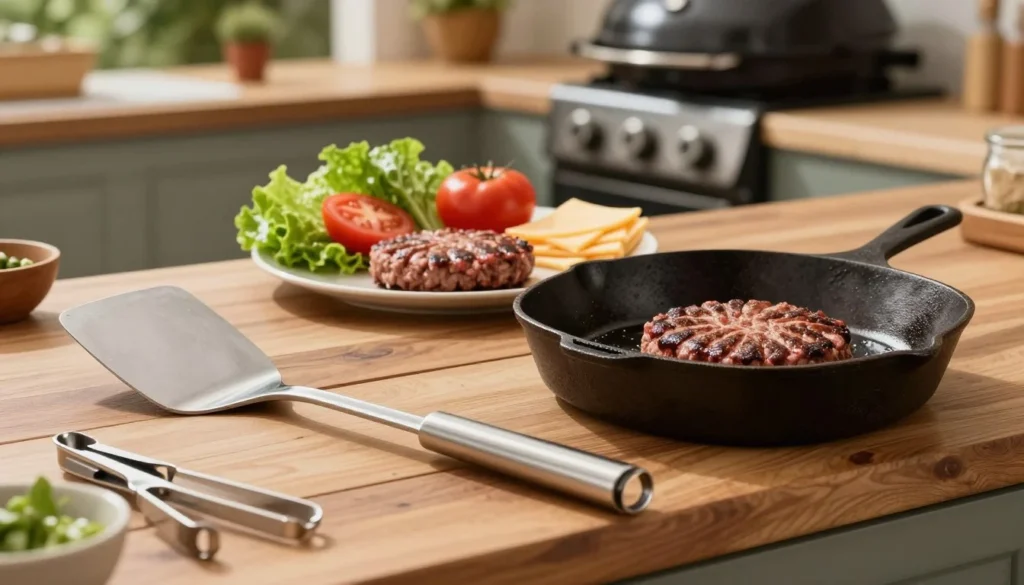
7 Core Smash Burger Techniques
1. Keep Beef Cold
Cold beef maintains structure and improves sear quality.
2. Form Loose Balls
Do not pre-shape patties. Loose meat allows proper expansion when smashed.
3. Smash Once — Firmly
Use parchment paper and apply firm pressure for 8–10 seconds.
4. Season Immediately
Salt enhances protein browning and draws flavor to the crust. Learn more about salt and its culinary role.
5. Leave It Alone
Crust formation requires uninterrupted contact. Resist moving the patty early.
6. Flip with Precision
Use a sharp spatula edge and scrape firmly underneath to capture the crust.
7. Melt Cheese Strategically
Add cheese immediately after flipping and cover briefly to trap heat.
Advanced Heat Recovery Strategy
Every time you add cold beef, surface temperature drops. For consistent Smash Burger Recipe Blackstone performance, allow 30–60 seconds of recovery between batches. Professional kitchens rely on heat stabilization to maintain quality across volume cooking.
Watch the surface carefully. If sizzling weakens, wait before starting the next round.
Common Mistakes That Ruin Smash Burgers
- Surface not fully preheated
- Overhandling meat
- Pressing multiple times
- Using lean beef
- Overcrowding the griddle
- Cooking too long after flipping
Each of these mistakes interrupts crust development or reduces juiciness.
Food Safety Considerations
Because ground meat distributes bacteria throughout the product, proper cooking temperature matters. Review food safety fundamentals for best practices. A thermometer ensures safe and consistent results.
Building the Perfect Smash Burger
Texture balance defines the final result. Soft toasted buns provide contrast to crispy edges. Fresh toppings add crunch and acidity. A balanced sauce enhances richness without overpowering beef flavor.
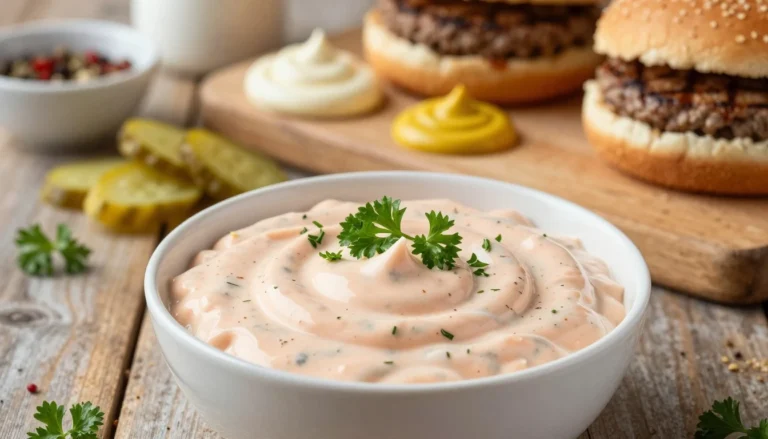
For full flavor impact, pair this Smash Burger Recipe Blackstone with our Smash Burger Sauce Recipe.
Conclusion
Mastering the Smash Burger Recipe Blackstone comes down to five principles: high heat, correct fat ratio, decisive smashing, patience for crust formation, and disciplined flipping. When these variables align, you achieve crispy edges and juicy centers with reliable consistency.
Trust the heat, respect the timing, and serve immediately for maximum texture contrast.
This Smash Burger Recipe Blackstone delivers restaurant-level results every time you fire up your griddle.
Smash Burger Recipe Blackstone – 7 Secrets to Perfect Crispy Edges
4
servings14
minutes10
minutes520
kcalIngredients
1½ lbs (680g) 80/20 ground beef
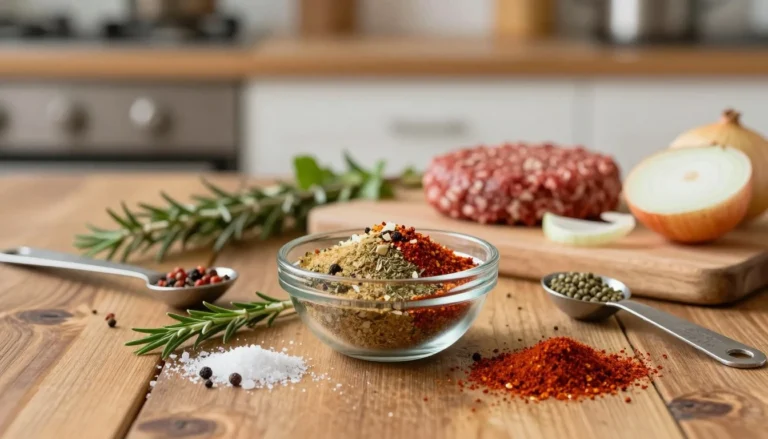
1½ teaspoons kosher salt
1 teaspoon freshly ground black pepper
8 slices American cheese (or cheddar cheese)
4 soft burger buns (potato buns or brioche)
½ small onion, thinly sliced
½ cup sliced pickles
4 lettuce leaves
1 large tomato, sliced
½ cup smash burger sauce
1 tablespoon butter (for toasting buns)
Directions
- Preheat your Blackstone griddle to 400–450°F. If possible, create two heat zones: high for smashing and medium for finishing.
- Separate the ground beef into 8 loose balls (about 3 oz each). Do not pack tightly.
- Place beef balls onto the hot surface. Cover each with parchment paper and press firmly with a heavy spatula for 8–10 seconds to create thin patties.
- Sprinkle salt and black pepper over each patty right after smashing.
- Let the patties cook undisturbed for about 2 minutes, or until the edges become deeply browned and crispy.
- Scrape underneath firmly with a sharp spatula and flip once. Immediately add a slice of cheese. Cook for 45–60 seconds more.
- Lightly butter the buns and toast them on the cooler side of the griddle until golden.
- Stack two patties per bun. Add onions, pickles, lettuce, tomato, and smash burger sauce. Serve immediately for maximum crispness.
Notes
- Use 80/20 ground beef for best crust formation and flavor. Lean beef will not brown as aggressively.
- Smash the patties once only. Re-pressing after the crust forms will squeeze out juices.
- Keep the beef cold until cooking for better structure and searing performance.
- Allow the griddle to recover heat between batches (30–60 seconds) to maintain consistent crust.
- Serve immediately after assembling to preserve crispy edges and melted cheese texture.
- Avoid overcrowding the griddle, as this lowers surface temperature and reduces browning.
FAQ
What beef works best for Smash Burger Recipe Blackstone?
80/20 ground beef provides ideal fat for browning and moisture retention.
Should I oil the griddle?
No. Rendered fat from 80/20 beef provides sufficient lubrication.
Why is crust formation so important?
The crust delivers the majority of flavor through Maillard browning.
Can beginners master Smash Burger Recipe Blackstone?
Yes. With proper heat control and one firm smash, beginners can produce consistent, crispy results.