Iced Matcha Latte Recipe – 3 Steps to a Perfect Smooth Cup
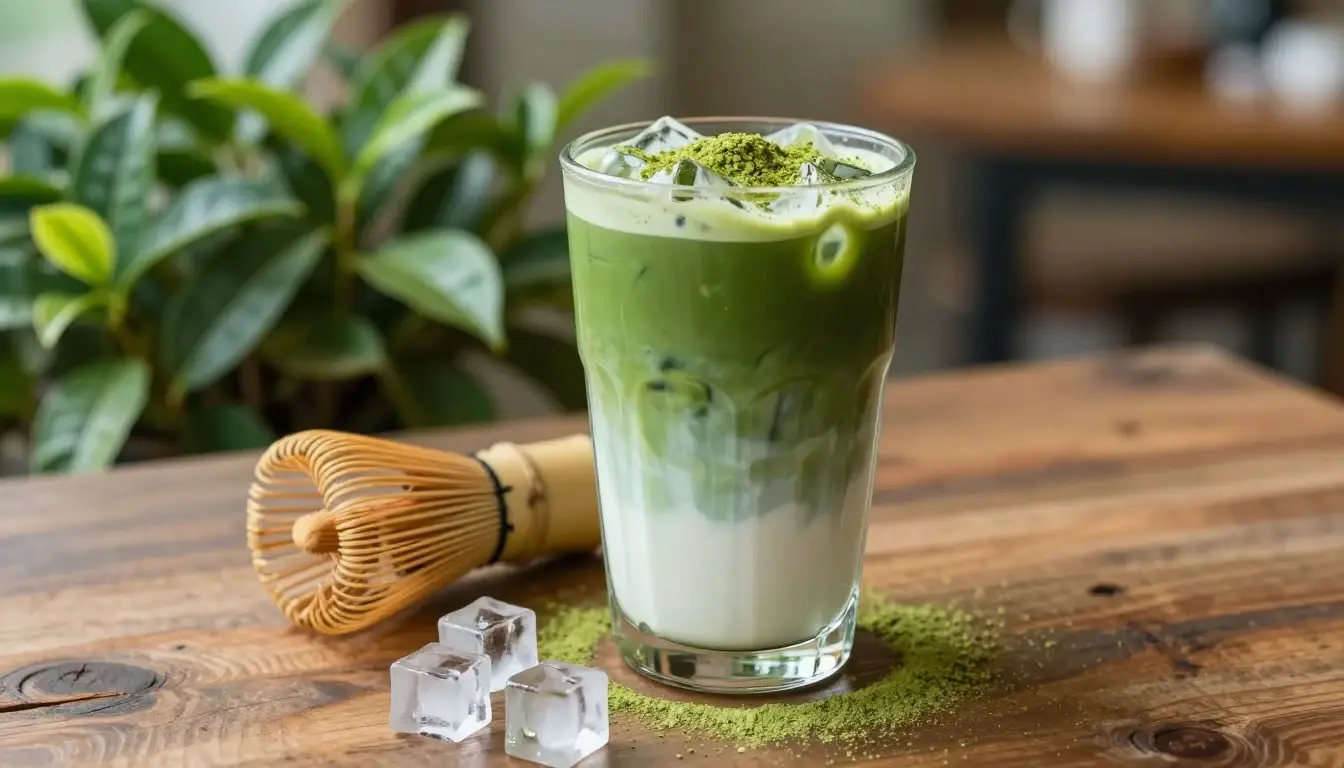
This Iced Matcha Latte Recipe delivers a smooth, café-quality result with three core ingredients and one technique that prevents the “green sludge” problem. The key is to build a concentrated matcha base with warm (not boiling) water before anything cold touches the powder. That short step keeps particles suspended evenly, so you get a clean, creamy sip instead of grit collecting at the bottom.
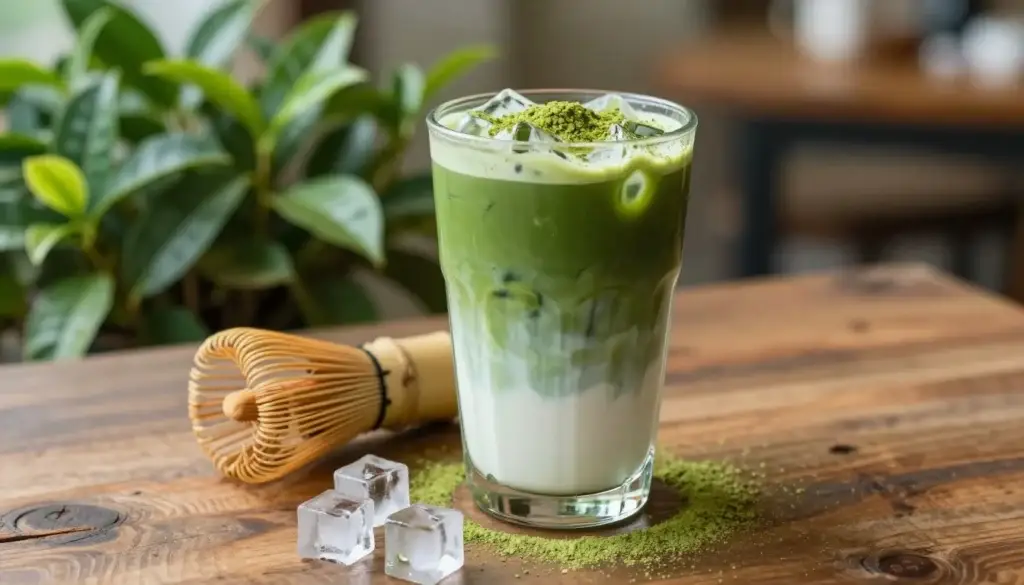
Making an iced matcha latte recipe at home gives you control over strength, milk texture, and sweetness without relying on flavored syrups. The biggest quality jump comes from understanding what matcha is: finely milled tea leaves that form a suspension, not a fully dissolved drink. For quick background on how matcha is produced and why it behaves differently than steeped tea, the matcha overview is a helpful reference.
Key Takeaways
- Three core ingredients, plus ice and a small amount of warm water to create a smooth base.
- Sifting first reduces micro-clumps that cause gritty texture, even with premium powders.
- Milk choice changes body and sweetness—oat and whole milk mask bitterness better than very light milks.
- Liquid sweeteners blend evenly in cold drinks; add them to the warm base for the most consistent taste.
- Ahead-of-time prep works best for the matcha base (powder + warm water), not the fully iced drink.
Ingredients for Your Iced Matcha Latte Recipe
The ingredient list is short, but each component has a clear job in flavor, color, and mouthfeel. When something tastes “off,” it’s usually one ingredient choice (or freshness) rather than a complicated technique problem.
Matcha Powder Grade and Flavor Impact
For an iced matcha latte recipe, ceremonial or premium-grade matcha usually gives the cleanest flavor and smoothest texture because it’s finely milled and less astringent. Cold drinks mute sweetness and highlight bitterness, so a lower-quality powder can taste sharper once chilled. If your matcha tastes dull, brownish, or aggressively vegetal even with correct mixing, oxidation is a common culprit—light, heat, and air degrade aroma compounds and color over time. To protect flavor, keep matcha tightly sealed and away from the stove, window, and humidity.
Milk: How Each Option Affects Texture
Milk does more than dilute matcha—it shapes body. Whole dairy milk produces the richest mouthfeel because fat rounds bitterness and gives a thicker finish. Oat milk is the closest plant-based option for creaminess, especially “barista” styles that foam well and hold up as ice melts. Almond milk makes a lighter drink with a thinner texture, which can make matcha taste more intense (and sometimes more bitter) at the same powder level. If your drink tastes harsh, try a creamier milk before increasing sweetener.
Sweetener Selection
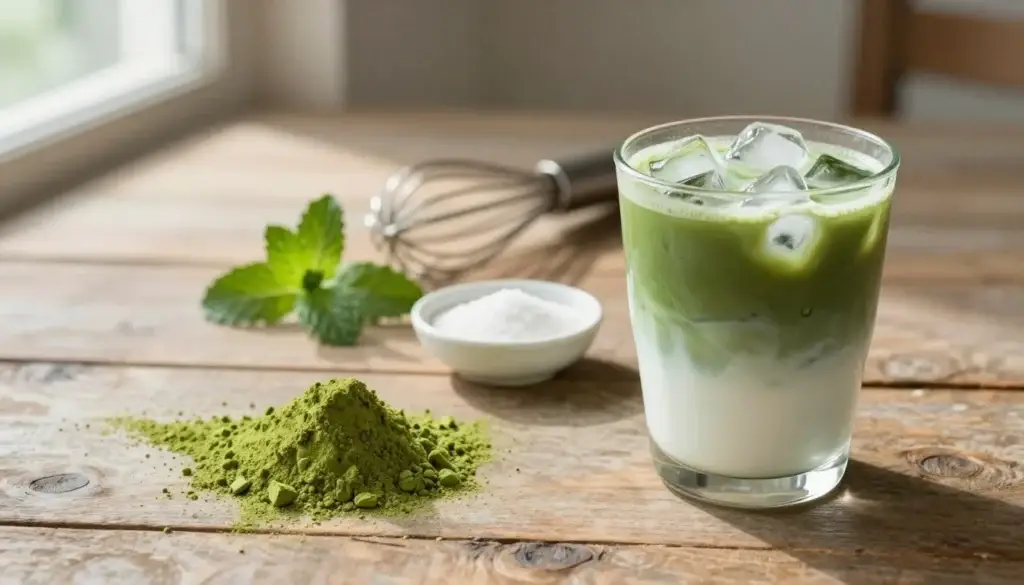
Liquid sweeteners—honey, maple syrup, or simple syrup—disperse immediately, which matters because cold milk slows dissolution. Granulated sugar often sinks and tastes uneven from sip to sip unless you shake aggressively for a long time. For the most consistent result, stir sweetener into the warm matcha base before milk goes in. This also helps you taste and adjust while the drink is still concentrated, before ice dilution changes the balance.
Technique: Why the Base Step Makes or Breaks Your Iced Matcha Latte Recipe
Matcha is a suspension: tiny particles remain dispersed through agitation rather than dissolving like instant coffee. Adding powder directly to a cold glass encourages clumps because cold liquid slows wetting, and the powder forms dry pockets that resist mixing. Once those clumps set, they often survive stirring and end up as gritty specks.
Warm water (about 70–80°C / 158–176°F) makes the powder hydrate quickly and evenly, forming a smooth base that blends cleanly with milk. Avoid boiling water—too much heat can push the flavor toward bitterness and mute the bright green color. Whisk in a zig-zag or M-shaped motion instead of circles; it creates more shear at the bottom of the bowl and breaks particles apart faster. A handheld frother works well for daily use, while a bamboo whisk gives excellent control if you already own one.
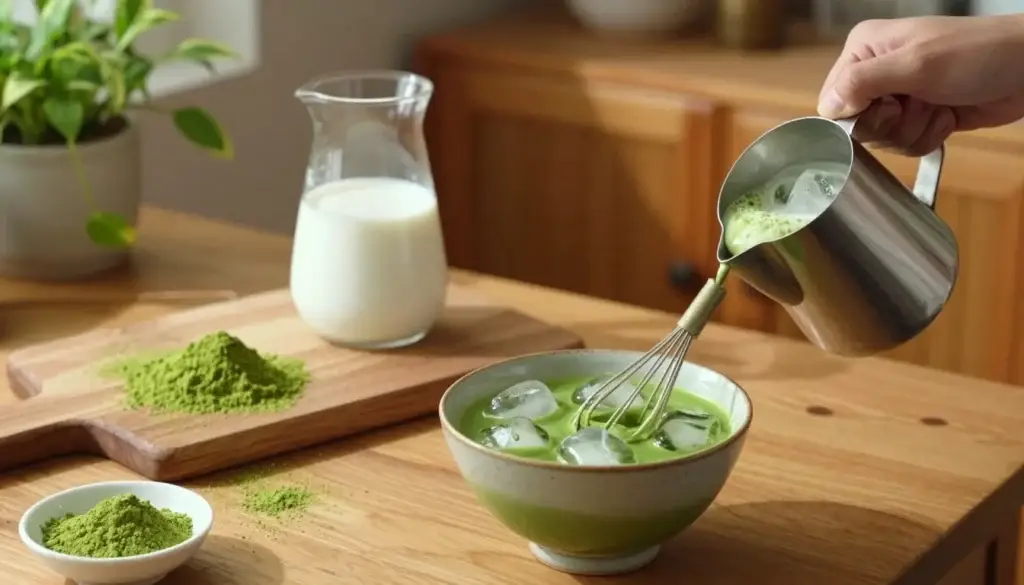
How to Make an Iced Matcha Latte Recipe Step-by-Step
The recipe card below includes the exact quantities and the core method. The notes here explain what you should look for at each stage, so you can adjust strength and sweetness without guessing.
Step 1: Sift the Powder
Even fresh matcha forms micro-clumps from static and moisture exposure during storage. Sifting breaks those clumps apart before water hits the powder, which is the easiest way to reduce grit. If you don’t have a sifter, push the powder through a fine-mesh strainer using the back of a spoon, focusing on any compacted bits.
Step 2: Build the Matcha Base
Add warm water and whisk until the mixture looks glossy and uniform with no dry patches along the sides. The base should pour freely; if it stays thick like paste, add a small splash more warm water and whisk again. A smooth surface with light froth is a good sign the particles are evenly dispersed, which keeps the drink stable longer once it hits ice.
Step 3: Add Sweetener, Then Milk
Mix sweetener into the warm base first so it fully dissolves and doesn’t pool at the bottom of the glass. Then add milk and stir or froth until the color is consistently green. Taste before icing: once chilled, sweetness reads lower and bitterness reads higher. If you want a bolder drink, increase matcha in small steps rather than cutting milk, which can make the texture feel chalky.
Step 4: Pour Over Ice
Use plenty of ice so the drink chills quickly and stays cold. Faster chilling helps preserve the clean matcha aroma, while slow chilling can taste flatter as the ice melts and waters down the balance. Some settling after a few minutes is normal in any iced matcha latte recipe—a quick stir with a straw brings it right back.
Troubleshooting and Flavor Adjustments
If your iced matcha latte recipe doesn’t taste right, one variable is usually responsible. Fix the likely cause first, then adjust strength or sweetness after the texture is smooth.
- Too bitter: Use slightly cooler water, switch to a fresher or higher-grade matcha, or increase milk by a small splash. Sweetening helps, but it won’t fully hide old, harsh powder.
- Dull or yellow-green color: Oxidation is likely. Fresh matcha should look vivid green; store it airtight and away from heat and light.
- Still clumping: Sift every time and whisk with warm water first. Cold liquid touching dry powder is the main cause of stubborn clumps.
- Too mild: Increase matcha by a small amount and keep milk the same. Overshooting the powder can create a dry, chalky finish rather than a stronger “tea” flavor.
Flavor variations: A few drops of vanilla extract rounds the edges without making the drink taste sugary. For a slightly toasted note, use maple syrup instead of honey. If you want a thicker texture, choose a creamier milk and add sweetener to the warm base so the flavor stays balanced after ice melts. To build out your drinks and dessert pairing options, try a quick microwave cake or keep homemade hot chocolate mix ready for cold-weather days.
Conclusion
A consistent iced matcha latte recipe comes down to two non-negotiables: sift the powder and whisk it into a smooth warm-water base before adding milk or ice. Once that base is right, you can fine-tune everything else—matcha strength, milk richness, and sweetness—without fighting clumps or grit.
For best results over time, store matcha airtight in a cool, dark place to slow oxidation and preserve color. If your drink varies from batch to batch, freshness is often the reason, not your technique. When the powder is fresh and the base is smooth, this iced matcha latte recipe stays reliably creamy and clean-tasting. If you want another chilled drink that’s different in flavor but just as simple, a refreshing pink drink is an easy option to rotate in.
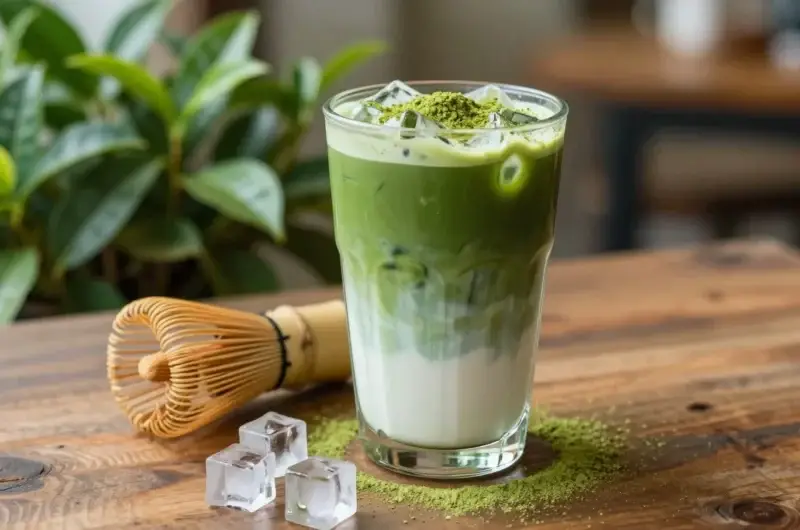
Iced Matcha Latte Recipe – Smooth 3-Ingredient Café Style
Course: Drinks1
servings5
minutes140
kcalIngredients
1–2 teaspoons high-quality matcha powder (sifted)
2–3 tablespoons warm water (not boiling)
¾–1 cup milk (dairy, oat, almond, or preferred option)
1–2 teaspoons honey, maple syrup, or simple syrup (optional, to taste)
1 cup ice
Directions
- Sift the matcha into a small bowl to remove clumps.
- Add warm water (not boiling) and whisk in a zig-zag motion until smooth and slightly frothy.
- Stir in sweetener while the matcha base is still warm, if using.
- Add milk and whisk or froth again until fully combined and evenly green.
- Fill a glass with ice, then pour the matcha mixture over the ice.
- Stir gently before serving to keep everything well blended.
Notes
- Use warm, not boiling water. Water that’s too hot can make matcha taste bitter and dull the bright green color.
- Always sift first. Even high-quality matcha forms tiny clumps—sifting ensures a smooth, café-style texture.
- Adjust strength gradually. If the flavor is too strong, add a splash of milk rather than reducing ice.
- Liquid sweeteners blend best. Honey, maple syrup, or simple syrup dissolve more evenly in cold drinks than granulated sugar.
- Some settling is normal. Matcha is suspended tea, not fully dissolved—just stir with a straw if needed.
- Make-ahead tip: You can prepare the matcha base (matcha + warm water) and refrigerate it for up to 24 hours. Whisk or shake before adding milk and ice.
FAQ
What is the best grade of matcha for an iced latte?
Premium or ceremonial grade typically produces a smoother, less bitter drink because it’s finer and less astringent. Cold temperatures emphasize bitterness, so grade matters more here than in hot matcha. Culinary-grade matcha can work, but it often tastes earthier and may need a creamier milk (or a small amount of liquid sweetener) to balance.
Do I need a bamboo whisk to avoid clumps?
No. A handheld frother is equally effective and fast for daily use. What matters most is the order: sift first, whisk with warm water to create a smooth base, then add milk and ice. The tool can change speed and foam level, but the base technique prevents clumping.
Which milk gives the creamiest texture?
Whole dairy milk gives the richest body and the most rounded flavor. Among plant-based options, oat milk is usually the creamiest and holds up well as the drink chills. Almond milk makes a lighter cup and can taste more diluted as ice melts, so consider using a slightly stronger matcha base if you prefer it.
How can I sweeten this iced matcha latte recipe without refined sugar?
Honey and maple syrup are both effective because they dissolve easily. Add them to the warm base before milk so the sweetness distributes evenly instead of settling. If you prefer very light sweetness, start with a small amount—once the drink is cold, you can always add a touch more and stir.
Why does matcha settle at the bottom of the glass?
Matcha particles are suspended in liquid, not dissolved, so settling over time is normal. This happens even with a well-made iced matcha latte recipe and doesn’t mean you did anything wrong. Stir briefly with a straw to re-disperse the particles and restore an even texture.
Can I make the matcha base in advance?
Yes. Whisk matcha with warm water until smooth, seal it in a jar, and refrigerate. Before serving, shake or whisk the base again, add milk, then pour over fresh ice. This keeps the texture consistent and avoids a watered-down drink from pre-melted ice.