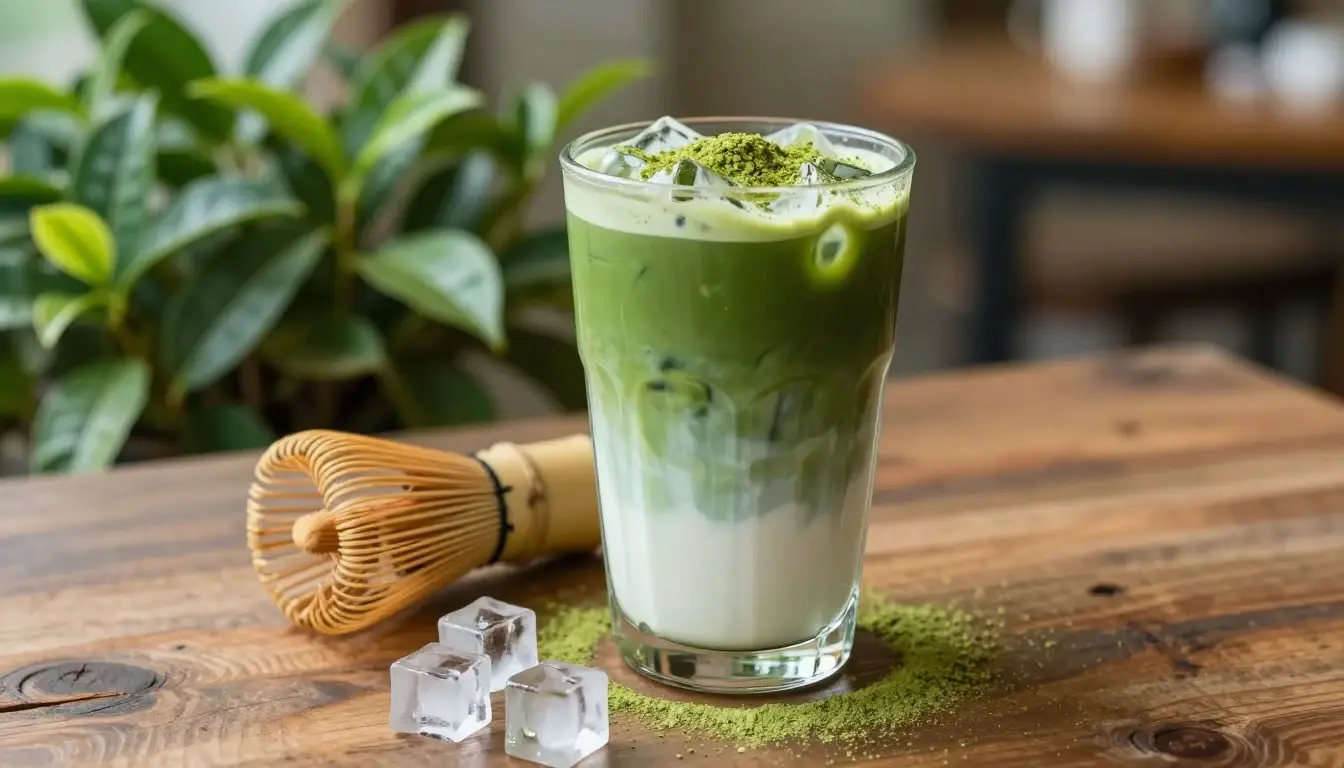
Iced Matcha Latte Recipe: 3 Ingredients, Smooth Every Time
This iced matcha latte recipe delivers a smooth, café-quality result with three core ingredients and one technique that prevents the “green sludge” problem. The key is building a concentrated matcha base with warm—not boiling—water before anything cold touches the powder. That single step keeps particles suspended evenly, so you get a clean, creamy sip instead of grit at the bottom.
Making this iced matcha latte recipe at home gives you full control over strength, milk texture, and sweetness—without flavored syrups or guesswork. The biggest quality factor is understanding what matcha actually is: finely milled tea leaves that form a suspension, not a fully dissolved drink. Because particles stay dispersed through agitation rather than dissolving, technique matters more here than it does with instant coffee or loose-leaf tea. For a useful overview of how matcha is produced and why it behaves differently than steeped teas, the matcha reference page is worth a quick read.
Key Takeaways
- Three core ingredients, plus ice and a small amount of warm water to build a smooth base.
- Sifting first removes micro-clumps that cause gritty texture, even in premium powders.
- Milk choice changes body and bitterness—oat and whole milk are more forgiving than thin milks.
- Liquid sweeteners blend evenly in cold drinks; add them to the warm base for consistent flavor.
- Prep the matcha base ahead if needed—the fully assembled drink does not hold well over time.
Ingredients for an Iced Matcha Latte Recipe That Actually Works
The ingredient list is short, but each component has a specific role in flavor, color, and mouthfeel. When something tastes off in your iced matcha latte recipe, it’s almost always one ingredient choice—or freshness—rather than a complicated technique problem.
Matcha Powder: Grade and Flavor Impact
Ceremonial or premium-grade matcha is the better choice for a cold drink because it’s finely milled and naturally less astringent. Cold temperatures suppress sweetness and amplify bitterness, so a lower-grade powder can taste sharper once chilled. If your matcha looks brownish or tastes aggressively vegetal even with correct mixing, oxidation is the likely cause—heat, light, and air degrade both aroma compounds and color over time. Store it tightly sealed, away from the stove, window, and any source of moisture.
Milk: How Each Option Changes Texture
Milk doesn’t just dilute matcha—it shapes how the drink feels in the mouth. Whole dairy milk produces the richest body because fat rounds bitterness and adds a thicker finish. Oat milk is the closest plant-based equivalent for creaminess, especially barista-style versions that hold up as ice melts. Almond milk makes a lighter cup, but its thin texture can make matcha taste more intense and, at the same powder level, more bitter. If your iced matcha latte recipe tastes harsh, try a creamier milk before reaching for more sweetener.
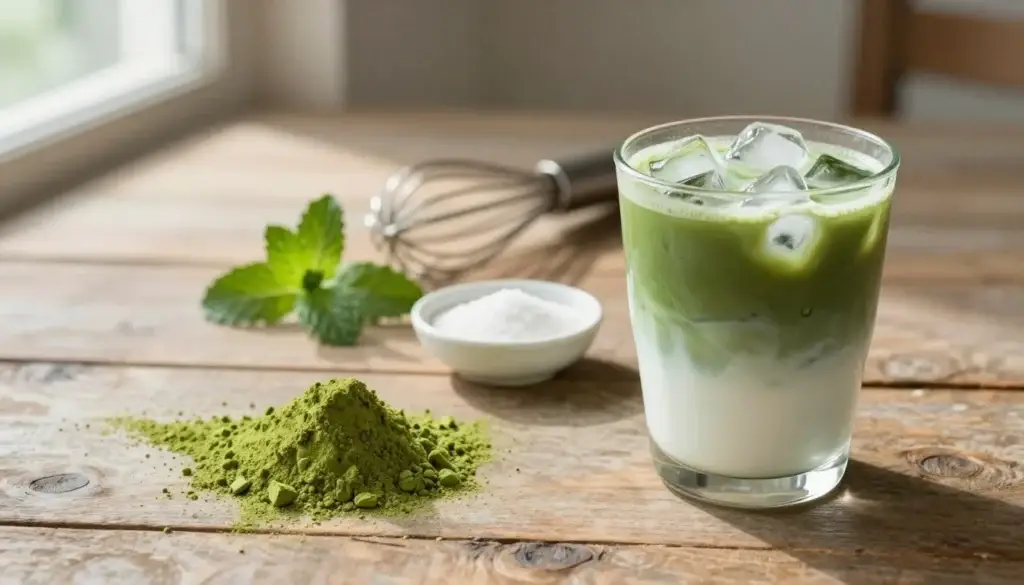
Sweetener: Why Liquid Beats Granulated
Liquid sweeteners—honey, maple syrup, or simple syrup—disperse immediately, which matters because cold milk slows sugar dissolution. Granulated sugar often sinks and creates uneven sweetness from sip to sip unless you shake aggressively. The most consistent approach is to stir sweetener into the warm matcha base before any milk goes in. You can taste and adjust while the mixture is still concentrated, before ice dilution shifts the balance.
Why the Base Step Determines the Quality of Your Iced Matcha Latte Recipe
Matcha is a suspension: tiny particles remain dispersed through agitation, not dissolved like instant coffee. Adding powder directly to a cold glass creates clumps because cold liquid slows wetting, and the powder forms dry pockets that resist mixing. Once those clumps form, they often survive stirring and end up as gritty specks in your finished iced matcha latte recipe.
Warm water at around 70–80°C (158–176°F) lets the powder hydrate quickly and evenly, forming a smooth base that blends cleanly with cold milk. Avoid boiling water—excess heat pushes flavor toward bitterness and dulls the bright green color. Whisk in a zig-zag or M-shaped motion rather than circles; this creates more shear force at the bottom of the bowl and breaks particles apart faster. A handheld frother works well for daily use. A bamboo whisk gives slightly more control if you already own one.
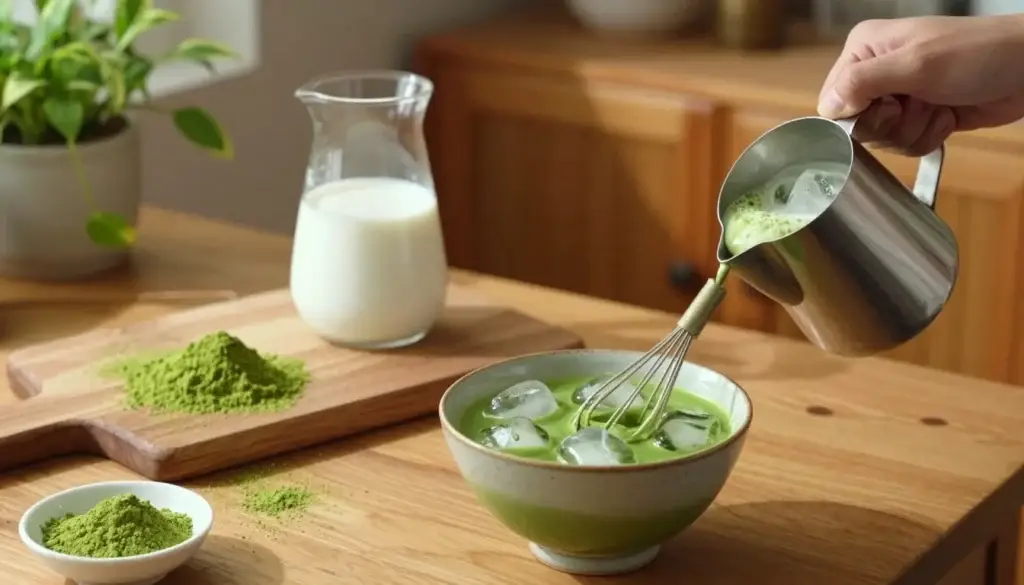
Step-by-Step Technique Notes
The recipe card below contains exact quantities and the full method. These notes explain what to look for at each stage of your iced matcha latte recipe so you can adjust strength and sweetness without guessing.
Sifting: The Step Most People Skip
Even fresh matcha forms micro-clumps from static and moisture exposure during storage. Sifting breaks those apart before water touches the powder—it’s the easiest way to reduce grit with zero extra effort. No sifter? Push the powder through a fine-mesh strainer using the back of a spoon, focusing on any compacted areas.
Reading the Base Before You Add Milk
After whisking, the base should look glossy and uniform with no dry patches along the sides of the bowl. It should pour freely—if it’s paste-thick, add a small splash of warm water and whisk again. Light surface froth indicates the particles are well dispersed, which keeps the drink stable longer once it hits cold milk and ice.
Tasting Before Ice: Why It Matters
Always taste the matcha-milk mixture before pouring over ice. Once chilled, sweetness reads lower and bitterness reads higher. If you want a stronger drink, increase matcha in small increments rather than cutting milk—reducing milk makes the texture thin and sometimes chalky rather than delivering a cleaner tea flavor.
Troubleshooting Common Problems
Most issues with a homemade iced matcha latte recipe trace back to one variable. Identify the likely cause first, then adjust strength or sweetness once the texture is smooth.
- Too bitter: Use slightly cooler water, switch to fresher or higher-grade matcha, or add a small splash more milk. Sweetener helps, but won’t fully mask old or harsh powder.
- Dull or yellow-green color: Oxidation. Fresh matcha should be vivid green. Store it airtight, away from heat and light.
- Persistent clumping: Sift every time and always whisk with warm water first. Cold liquid on dry powder is the primary cause of stubborn clumps.
- Too mild: Increase matcha in small increments while keeping milk the same. Overshooting creates a dry, chalky finish rather than a stronger tea flavor.
Flavor variations: A few drops of vanilla extract softens the edges without making the drink taste overtly sweet. Maple syrup adds a lightly toasted note that complements matcha’s grassy character better than granulated sugar. For a thicker texture, choose a creamier milk and sweeten in the warm base so flavor balance holds after ice melts. Looking for something to pair alongside your iced matcha latte recipe? A quick microwave cake works well, or keep homemade hot chocolate mix ready for colder days.
Conclusion
A reliable iced matcha latte recipe depends on two non-negotiables: sift the powder and whisk it into a smooth warm-water base before adding anything cold. Once that base is right, you can fine-tune matcha strength, milk richness, and sweetness without fighting clumps or uneven flavor. Keep matcha airtight in a cool, dark place— freshness is the most common reason a drink varies from batch to batch, not technique. When the powder is good and the base is smooth, this iced matcha latte recipe stays reliably creamy and clean-tasting every time.
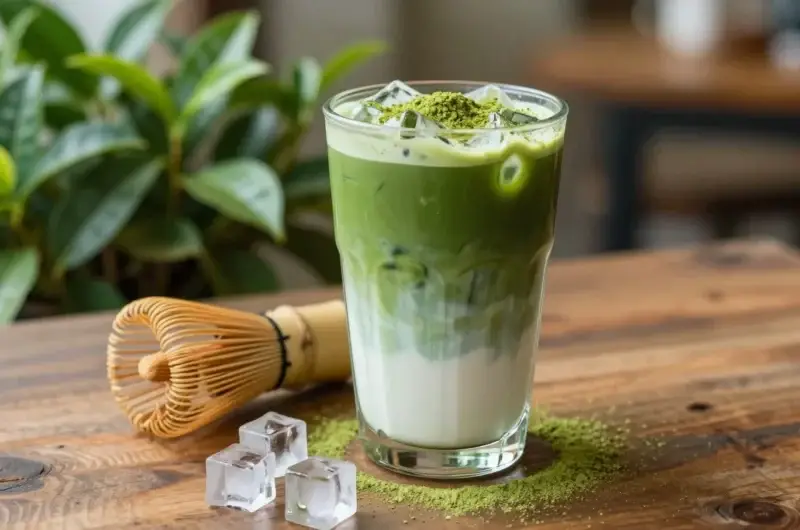
Iced Matcha Latte Recipe – Smooth 3-Ingredient Café Style
Course: Drinks1
servings5
minutes140
kcalIngredients
1–2 teaspoons high-quality matcha powder (sifted)
2–3 tablespoons warm water (not boiling)
¾–1 cup milk (dairy, oat, almond, or preferred option)
1–2 teaspoons honey, maple syrup, or simple syrup (optional, to taste)
1 cup ice
Directions
- Sift the matcha into a small bowl to remove clumps.
- Add warm water (not boiling) and whisk in a zig-zag motion until smooth and slightly frothy.
- Stir in sweetener while the matcha base is still warm, if using.
- Add milk and whisk or froth again until fully combined and evenly green.
- Fill a glass with ice, then pour the matcha mixture over the ice.
- Stir gently before serving to keep everything well blended.
Notes
- Use warm, not boiling water. Water that’s too hot can make matcha taste bitter and dull the bright green color.
- Always sift first. Even high-quality matcha forms tiny clumps—sifting ensures a smooth, café-style texture.
- Adjust strength gradually. If the flavor is too strong, add a splash of milk rather than reducing ice.
- Liquid sweeteners blend best. Honey, maple syrup, or simple syrup dissolve more evenly in cold drinks than granulated sugar.
- Some settling is normal. Matcha is suspended tea, not fully dissolved—just stir with a straw if needed.
- Make-ahead tip: You can prepare the matcha base (matcha + warm water) and refrigerate it for up to 24 hours. Whisk or shake before adding milk and ice.
FAQ
What is the best grade of matcha for an iced latte?
Premium or ceremonial grade typically produces a smoother, less bitter iced matcha latte recipe because the leaves are finely milled and lower in astringency. Cold temperatures amplify bitterness, so grade matters more here than in hot matcha. Culinary-grade can work but often tastes earthier and benefits from a creamier milk or small amount of liquid sweetener to balance.
Do I need a bamboo whisk to avoid clumps?
No. A handheld frother is equally effective and faster for daily use. What matters most is order: sift first, then whisk with warm water to build a smooth base before adding milk and ice. The tool affects foam level and speed, but the base technique is what actually prevents clumping in any iced matcha latte recipe.
Which milk gives the creamiest texture?
Whole dairy milk gives the richest body and most rounded flavor. Among plant-based options, oat milk is the creamiest and holds up well as the drink chills. Almond milk makes a lighter, thinner cup—if you prefer it, use a slightly stronger matcha base to compensate for the reduced body.
How can I sweeten this without refined sugar?
Honey and maple syrup both work well because they dissolve easily in the warm base. Add them before milk so sweetness distributes evenly rather than settling at the bottom. If you want very light sweetness, start small—once cold you can always stir in a touch more.
Why does matcha settle at the bottom of the glass?
Matcha particles are suspended in liquid, not dissolved, so settling over time is completely normal—even in a well-made iced matcha latte recipe. It doesn’t indicate a technique error. Stir briefly with a straw to re-disperse the particles and restore an even color and texture.
Can I make the matcha base in advance?
Yes. Whisk matcha with warm water until smooth, seal it in a jar, and refrigerate. Before serving, shake or whisk the base again to re-disperse the particles, then add milk and pour over fresh ice. Pre-assembling the full drink ahead of time leads to dilution and flat flavor as ice melts, so keep the base and milk separate until you’re ready to serve.